Family and Consumer Sciences Degree

Earn your bachelor’s degree in Family and Consumer Sciences at Wayne State College in Nebraska. Multiple concentrations of study are available.

An FCS degree student works in the textiles lab at WSC

Explore the Family and Consumer Sciences degree

Do you have a passion for home-related functions such as family living, consumer economics, foods and nutrition, clothing and textiles, child development, and parenting? If yes, consider a Family and Consumer Sciences degree from Wayne State College.

As a Family and Consumer Sciences major, you'll get to choose from one of four concentrations to prepare for careers that improve individual, family, and community well-being, and impact the development, delivery, and evaluation of consumer goods and services. If you pursue the general Family and Consumer Sciences concentration, you'll gain a broad background in the fields of fashion merchandising, foods and nutrition, and interior design. Otherwise, you can choose any of these subjects as your concentration to go deeper and specialize in a particular field.

Concentrations within the FCS major include:

If you want to teach family and consumer sciences, consider our Family and Consumer Sciences Education Program.

View program courses  Download program fact sheet (PDF)

Fast facts

Degree options: B.A. or B.S. in Family and Consumer Sciences


Delivery format: On campus (Wayne)


Program credit hours: 48

  • FCS core (15 credit hours)
  • FCS concentration (33 credit hours)

Note: Students must also take 30 credit hours of General Studies courses. A total of 120 credit hours are needed to graduate from WSC. Additional majors or minors can be added to help meet graduation requirements.


School: Education and Behavioral Sciences


Department: Educational Foundations and Leadership

Prepare for your future

Opportunities and outcomes

Family and consumer sciences topics covered

  • Consumer economics
  • Professional development and presentation
  • Parenting and family relationships
  • Family resource management
  • Meal planning and preparation
  • Fashion analysis and forecasting
  • Clothing and textile construction

Student learning outcomes

  • Demonstrate professional communication skills in family and consumer sciences settings
  • Apply knowledge from their program of study to current and future issues in family and consumer sciences
  • Utilize critical thinking for problem solving in family and consumer sciences settings

Family and consumer sciences internships

Our outstanding Career Services Office is available to help you find family and consumer sciences internships and career opportunities. Students recently completed internships at the following locations:

  • Finx Fashion Collection
  • Heritage Homes of Nebraska
  • Homestead Homes
  • IKT Boutique
  • MOD House Interiors
  • Omaha Fashion Week
  • Spaces Interior Design

Career services and internships

Graduates of the Family and Consumer Sciences program work in their chosen field using the skills they learned while at Wayne State College. Each year, eager employers welcome WSC graduates into their organizations.

Jobs of recent graduates:

  • 4-H Extension Officer - Pierce County Extension (Pierce, Neb.)
  • 4-H County Youth Educator - ISU Extension & Outreach (Ames, Iowa)
  • Child and Family Services Case Worker - Winnebago Tribe of Nebraska (Winnebago, Neb.)
  • Child Specialist - Girls, Inc. (Omaha, Neb.)
  • Early Childhood Educator - Employer Undisclosed (Omaha, Neb.)
  • Lead Toddler Teacher - Little Sprouts (Pender, Neb.)

Percent of WSC graduates  employed or in grad school within 6 months of graduation

job or grad school placement rate
within six months of graduation

Data based on most recent
employment outcomes survey

2025-26 Estimated Annual Cost of Attendance

$201.90

cost per credit hour

Tuition: $6,057

Fees: $2,351

Food plan: $4,830

Housing: $4,870

Total: $18,108
These figures do not include indirect cost estimates. To view a breakdown of estimated additional costs you may incur while attending WSC that are not billed to your student account, visit the Cost of Attendance page.
Cost of attendance

Least Expensive College in Nebraska

- CollegeTuitionCompare, 2025

Wayne State College is ranked the No. 1 least expensive four-year college in Nebraska and is recognized among the Top 10 most affordable colleges in the nation for out-of-state students. With the same tuition rates for in- and out-of-state students, a tuition guarantee, and generous scholarship opportunities, WSC makes earning a degree both accessible and affordable. In fact, the average remaining annual cost of attendance for 2024–25 is just $2,268 for undergraduate students after financial aid and scholarships.

Family and Consumer Sciences degree program courses

Students must complete core courses in the FCS major and concentration courses. A total of 120 credit hours are needed to graduate from WSC. Additional majors or minors can be added to help meet graduation requirements.
 

15

Family and consumer sciences
core credits

+
33

Family and consumer sciences
concentration credits

=
48

Total program
credits

Family and consumer sciences core (18 credits)

Note: All students majoring in family and consumer sciences must take BUS 122 Personal Finance for the CAT 3 General Studies requirement and FCS 207 Nutrition to meet the CAT 9 General Studies requirement.

  • Credits: 1

    Description: The history, growth and development of family and consumer sciences. Career exploration of the opportunities for careers open to family and consumer sciences graduates. Freshmen, sophomores, undeclared majors or by permission of instructor.

  • Credits: 3

    Description: Principles and concepts of individual development through the lifespan in the context of the family.

  • Credits: 3

    Description: Analysis of the management process and socio-economic influences as related to the utilization of resources to meet individual and family goals. Special management situation considered.

  • Credits: 3

    Description: A study of the fundamentals of verbal and nonverbal presentations, media techniques for presenting oral and written information, visual aids and their usage, and display techniques to enable the student to become more skilled at giving professional presentations.

  • Credits: 3

    Description: Development of responsible consumerism through value clarification, goal formulation, decision-making, and effective use of resources.

  • Credits: 2

    Description: Course to enhance the professional development of FCS majors. Topics to include networking, job search skills, portfolio development, professional associations, and entrepreneurship.

    Prerequisite: FCS 313 Techniques in Professional Presentation

Family and consumer sciences concentration (33 credits)

  • Credits: 3

    Description: This course evaluates clothing construction for the consumer relative to sewing projects and ready-to-wear. Components of quality workmanship, apparel fibers/fabrics, and cost factors are emphasized through construction and alterations projects.

  • Credits: 3

    Description: A study of relationships throughout the life cycle. Application of the critical thinking process to the identification of values, the formulation of goals, and the decision-making model in order to improve the quality of life for individuals and families.

  • Credits: 3

    Description: Application of concepts in menu planning, preparation, and time management principles related to budgeting and purchasing of food. Lecture and lab combined.

    Prerequisite: FCS 104 Principles of Food Preparation, FCS 107 Principles of Baking, or instructor approval

  • Credits: 3

    Description: Serviceability concepts, durability, comfort, care, and appearance as related to fibers, yarns, fabric construction, finishes, and designs. Consumer oriented approach.

  • Credits: 3

    Description: A study of the parenting relationships over the course of time from preparing for the first child through families with adolescent children into relationships with adult children. Traits and characteristics of healthy families and discipline techniques are included.

  • Credits: 3

    Description: This course will enable the student to attain a better understanding of the role of the community nutritionist in providing community nutrition program services and the availability of nutrition programs in the community. Nutrition education techniques for selected groups for health promotion, health maintenance, and rehabilitation will be utilized.

    Prerequisites: FCS 207 or instructor approval.
     

  • Credits: 3

    Description: A study of architectural housing styles, future trends in housing, housing selection as it concerns the family during stages of the family life cycle. Floor plans, furniture arrangement, elements and principles of design, color theory, and their application to housing will be covered. 

  • Select one of the following courses:

    • FCS 104 Principles of Food Preparation (3 credits) - The nutritional value of foods and the relation of food to health, fundamental principles of cookery applied to foods commonly used in the home. Lecture and lab combined. Class fee of $42 required.
       
    • FCS 107 Principles of Baking (3 credits) - An introduction to the principles and techniques used in the preparation of high-quality baked goods, with an emphasis on fundamental production techniques and evaluation of quality characteristics. The course will cover baking ingredients, use of equipment, proper storage, and sanitation methods. Lecture and lab combined. Class fee of $45 required.
  • Choose 6 credit hours from FCS electives not previously taken, including:
     

    • FCS 104 Principles of Food Preparation (3 credits) - The nutritional value of foods and the relation of food to health, fundamental principles of cookery applied to foods commonly used in the home. Class fee: $45.
       
    • FCS 107 Principles of Baking (3 credits) - An introduction to the principles and techniques used in the preparation of high-quality baked goods, with an emphasis on fundamental production techniques and evaluation of quality characteristics. The course will cover baking ingredients, use of equipment, proper storage, and sanitation methods. Class fee: $45.
       
    • FCS 109 Food Safety and Sanitation (1 credit) - This course studies the fundamentals pertaining to safe and sanitary food handling practices in the food service industry from receiving through preparation and service. Students will have the opportunity to earn certification through a ServSafe Manager Certificate (valid for 5 years). Class fee: $85.
       
    • FCS 110 Family and Personal Relationships (3 credits) - A study of relationships throughout the life cycle. Application of the critical thinking process to the identification of values, the formulation of goals, and the decision-making model in order to improve the quality of life for individuals and families.
       
    • FCS 120 Introduction to Early Childhood Education (2 credits) - A study of types of early childhood programs. Objectives and philosophies of various early childhood programs and curricula from both historical perspectives and current practices. Legislation and public policies, partnerships with family and community, and working with children with a range of abilities will be addressed. Infant/toddler and pre-school observation hours are required.
       
    • FCS 202 Clothing Design (3 credits) - Styles of fashion relative to garment components and industry trends are studied. Principles and elements of design will be applied to pattern drafting and garment construction. Prerequisite: FCS 103 Clothing Construction and Alterations or instructor approval. 
       
    • FCS 207 Nutrition (3 credits) - This course studies the basic nutrients and their relationship to physical, mental, and emotional health. Nutritional requirements and dietary planning for all age groups. Topics include the use of the computer for dietary analysis, evaluation of the analysis, and application to daily eating habits.
       
    • FCS 220 Infants and Toddlers (3 credits) - A study of human growth and behavior from conception through two years of age. Curriculum and assessment, language development, appropriate literature, play and discovery, children with a range of abilities, family and community partnerships will be addressed. Early childhood center observation is required. Prerequisite: FCS 120 Intro to Early Childhood Education or instructor approval.
       
    • FCS 314 Organization and Administration of Family and Consumer Sciences Programs (3 credits) - Introduction to the administration and organization of family and consumer sciences programs including budget and lab management, curriculum development for programs of study and scope/sequence of courses, effective technology use for households and classrooms, and analysis and assessment of resources.
       
    • FCS 317 Nutrition Through the Life Cycle (3 credits) - Knowledge and understanding of nutritional needs and recommendations throughout the life cycle from prenatal nutrition through adulthood and special needs of the elderly. Special emphasis on maternal health and the development of a healthy child.
       
    • FCS 319 Advanced Human Nutrition (3 credits) - Students will analyze the methods of evaluating nutrition status. Students will explain topics in nutrition, related nutritional biochemistry, and metabolism at normal and diseased states when nutrient availability is altered. Prerequisite: FCS 207 Nutrition, PED 207 Athletic Performance and Nutrition, or instructor approval.
       
    • FCS 322 International Foods and Cultures (3 credits) - An understanding of the influences of cultures on food and nutrition practices and beliefs. Prerequisite: FCS 104 Principles of Food Preparation or FCS 107 Principles of Baking; or instructor approval. Class fee: $45.
       
    • FCS 325 Health, Safety, and Nutrition for the Young Child (3 credits) - A course designed to assist early childhood and elementary educators by providing them with knowledge and skills to address the health, safety, and physical needs of young children (0-8 years). The promotion of good nutrition and a healthy lifestyle will also be emphasized.
       
    • FCS 335 The Pre-School Age Child (3 credits) - A study of human growth and behavior from 3 years of age through 5 years of age. Curriculum and assessment, emergent literacy, appropriate literature, play and discovery, children with a range of abilities, and family and community partnerships will be addressed. Early childhood center and pre-school observations are required. Prerequisite: FCS 120 Intro to Early Childhood Education or instructor approval.
       
    • FCS 403 Food Systems (3 credits) - This course studies and analyzes food system and associated health statuses, including the examination of the cultural, ecological, economic, societal, political, and ethical implications of the ways in which food is perceived, produced, and consumed. Students will use interdisciplinary perspectives and critical thinking skills to analyze the food systems on topics such as policy, accessibility, sustainability, and the role of technology, along with the impact on the individual, family, and community populations.
       
    • FCS 407 Nutritional Counseling and Assessment (3 credits) - Fundamental knowledge and skills in nutritional counseling, including theory and strategies of behavior change and principles of nutritional and dietary assessment. Prerequisite: FCS 207 Nutrition or instructor approval.
       
    • FCS 412 Guiding the Young Child (3 credits) - The role of teachers, childcare providers, and parents in providing an environment that is safe and developmentally appropriate for the development of the child’s potential is explored. This course includes field experience in pre-school settings. Prerequisites: FCS 335 The Pre-School Age Child and junior standing; or instructor approval. 
       
    • FCS 416 Family and Consumer Sciences Practicum (1-3 credits) - This course provides practical experience in the classroom or other professional settings. Experiences can include laboratory assistance, organization, presentation, and evaluation of activity units in family and consumer sciences. Prerequisite: Department chair approval Notes: May be taken twice.
       
    • FCS 430 Organization and Administration of Early Childhood Education Programs (3 credits) - This course provides a study of program development and management, safe and nurturing environments, and principles for successful operation of early childhood education programs and centers. Personnel management, public and private funding, legislation and public policy trends, environmental safety, children with a range of abilities, and family and community partnerships will be addressed. Prerequisites: FCS 220 and FCS 335.


Popular pairings

Many students at Wayne State will add a second major or a minor to complement their program of study or to focus their studies on a specific topic. Students who recently majored in Family and Consumer Sciences at Wayne State also paired this major with one or more of the following programs:  

View all majors and minors

Related programs

Students interested in the Family and Consumer Sciences program may also be interested in:

Early Childhood and Family Studies (B.A. or B.S.)
Family and Consumer Sciences Education (B.A. or B.S.)
One Health Studies (B.A. or B.S.)

Students in the WSC Student Center

Transfer to Wayne State

Our generous transfer credit policy will allow you to get credit for what you've already earned.

Transferring to Wayne State

Get in touch

Department of Educational Foundations and Leadership
Benthack Hall, Room 111
Phone: 402-375-7389

Visit the Department

Clubs for family and consumer sciences

Students gather at a table outside the library

Accreditation and Rankings

Recognized for excellence

Best Family and Consumer Sciences College

Universities.com ranked WSC’s Family and Consumer Sciences programs at No. 1 in Nebraska for program quality and successful graduate outcomes.
Learn more

Best Family and Consumer Sciences College in Nebraska award

A Best College of Distinction

Wayne State was recognized as a College of Distinction for our commitment to affordability, accessibility, and strong student outcomes that deliver a proven return on investment.

Learn more

Best Colleges of Distinction 2025-26 award badge

A Top Public College in the Midwest

Wayne State College is ranked among the top public colleges in the Midwest for 2026 by U.S. News & World Report, reflecting strong academics and student outcomes.
Learn more

top public colleges in u.s. award badge
Facilities

Where you'll learn

Students in this program will take courses in Benthack Hall, home to WSC's family and consumer sciences programs, educator preparation, and counseling programs. Benthack Hall features state-of-the-art learning environments that include two education labs, a counselor training clinic, and labs for foods, textiles, apparel, and interior design.
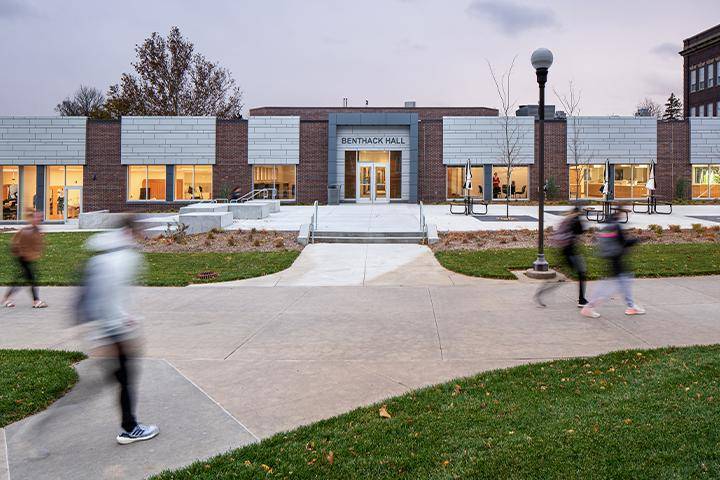
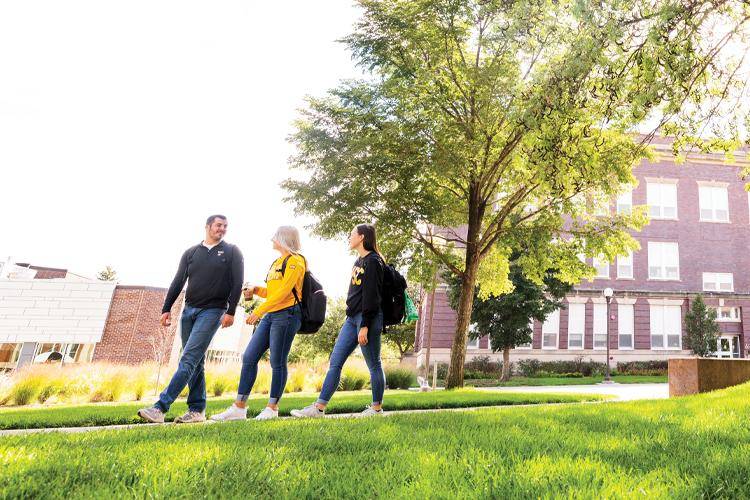
Benthack Hall at Wayne State College