
Advance your career with a master's in Higher Education and Student Affairs.
Learn to support college students and prepare for in-demand roles in advising, student services, and higher education leadership with Wayne State College.
![]()
Affordable
Among the lowest-cost master's degrees in the U.S.

![]()
Attainable
No entrance exams. All bachelor's degrees accepted.

![]()
Flexible
100% online with no campus visits required.

![]()
High quality
Our graduate programs are nationally ranked for excellence.
Online master's degree in Higher Education and Student Affairs
Wayne State College’s Master of Science in Education (MSE) in Higher Education and Student Affairs is rooted in evidence-based practice and student development theory, integrating coursework, applied learning, and reflective practice to prepare professionals who advance student learning, engagement, and success. Students build a strong foundation in student services and college counseling, including the history, purpose, and legal and ethical considerations that shape effective support systems in higher education.
Coursework explores critical issues in higher education, including student support services, organizational leadership, and conflict resolution, while strengthening skills in intercultural communication, career development, and research-informed decision-making. Graduates are prepared to pursue fulfilling careers across a wide range of leadership and service roles in higher education and student affairs.
- Integrate historical, theoretical, and ethical foundations of higher education and student affairs to guide professional identity, decision-making, and practice.
Apply student development, social identity, and leadership theories to design, evaluate and implement inclusive programs that foster student learning, engagement, and success.
Demonstrate professional competence through culturally responsive leadership, evidence-based assessment, and reflective practice that advances institutional effectiveness and continuous improvement.
Fast facts
Degree offered: Master of Science in Education (MSE) / Higher Education and Student Affairs
Delivery format: Online
Program credit hours: 30
School: Education and Behavioral Sciences
Department: Educational Foundations and Leadership
Estimated program cost
Credit hours: 30
Cost per credit hour: $412
*Based on 30 credit hours at the current tuition rates for 2025-26. Does not include indirect costs. For more information on costs of graduate tuition, visit the Cost of Attendance page.
Get started today!
Our free application can help you decide if Wayne State College is the right choice for you and your career goals.
Courses start: Monday, Aug. 24, 2026 (8- and 16-week fall sessions)
Program courses
Up to 12 credit hours may be transferred in from another regionally accredited graduate institution and applied toward a degree. Only transfer credit with a B grade or better is accepted. A B- is not acceptable. A total of 30 credit hours are needed to graduate with this degree. Students will also need to complete a thesis, internship, comprehensive examination, or project.
Credits: 3
Description: This leadership-focused course is designed to provide understanding of intercultural communications within organizational settings. It explores the role of effective communication in leadership, equipping students to navigate and influence diverse cultural environments across institutions. The course blends theory with practical applications to develop advanced communication strategies for interacting and leading within varied cultural contexts.
Credits: 3
Description: This course is designed to prepare graduate level counselor trainees to facilitate career and life planning decisions within an applied professional setting. Typical theoretical perspectives associated with career development and life-planning counseling will be highlighted. Career development program planning, organization, implementation, administration, and evaluation will be addressed. Assessment instruments and techniques associated with career planning and decision-making will be explored. Technology-based career development applications and strategies, including computer-assisted career guidance information will be utilized. This class will include such topics as foundations and resources, career-counseling programs for special populations, and techniques for career-counseling interviewing. Career development program planning, organization, implementation, administration, and evaluation will be addressed. Ethical issues associated with career counseling will be considered in detail.
Credits: 3
Description: This course explores human growth and development with emphasis on neurobiological processes relevant to counseling practice. It is designed to prepare graduate level counselor trainees to apply relevant principles of human transformation within an applied professional setting. A presentation of personality dynamics and behavioral manifestations at critical psychosocial stages of development over the lifespan will be provided based on a Neuro-Bio-Psycho-Social perspective. Cultural implications related to human development will be explored in detail as well as outlining impact of diverse systems on human development.
Credits: 3
Description: An introduction to student services in higher education: history, purpose, policies, and legal and ethical issues specific to higher education. Overview of developmental theories, settings and characteristics of college students and their interaction with campus and community influences including technology integration to student services.
Credits: 3
Description: Unique needs of higher education are explored including organizational culture, budgeting/finance, and personnel practices. Models of programs to meet these needs are examined. Development of essential leadership skills and competencies of student affairs professionals are described. Identification and exploration of applicable interventions across the higher education settings are explored for effective student and program outcomes.
Credits: 3
Description: Beginning graduate students will develop a practical knowledge and application of basic types of research, as well as basic research tools and skills that will be helpful to them throughout their program. Graduate students will create a research plan and write a review of literature (paper). Students will create appropriate survey and interview questions, develop a beginning understanding of educational statistics, and the process for developing a research proposal including Institutional Review Board requirements and application processes.
Select four of the following courses for a total of 12 credit hours:
- BUS 628 Dispute Resolution Management (3 credits) - This course is designed to give students an overview of alternative dispute resolution. Students will explore negotiations, a process that helps individuals and organizations settle disputes. Students will examine their personal style of management and their unique approach to conflict. This course uses case studies, simulations and role-playing to explore concepts of interests, collaboration, mediation, and nonverbal communications. Students will grow in their ability to anticipate the needs of their audience.
- BUS 665 Leadership Seminar (3 credits) - This course provides students with context and background for the consideration of leadership from multiple perspectives. The course explores leadership theory and practice. Special emphasis is placed on the translation of theory into practice. The evolution of leadership thought, situational leadership, and the future of leadership are also explored.
- CJA 652 Drugs and Society (3 credits) - Comprehensive analysis of the interrelationships among drug use/abuse, crime, and justice. The course will examine historical and contemporary policies, drug markets, drug trafficking, and drug offender arrests, as well as prosecution and sentencing of drug offenders by the state and federal courts.
- EDU 626 Advanced Educational Psychology (3 credits) - A study of theories of learning and motivation, conditions and processes of cognitive, affective, and psychomotor learning; personal qualities of a teacher; the teaching process, classroom management; teaching the exceptional learner; and the role of evaluation in learning and teaching.
- EDU 627 Current Issues and Trends in Education (3 credits) - This course offers intensive study of specific issues and trends that have direct impact upon education. Individuals will choose a topic to examine in breadth and depth. It presents a comprehensive approach to the exploration of the selected topics. The course offers opportunities for the students to examine relevant topics affecting education in breadth and depth.
- PED 685 Social Issues in Sport (3 credits) - This course is designed to examine the various ways issues such as politics, economics, education, the mass media, gender, race, and financial compensation intertwine with sport in the United States.
- SOC 515 The Family (3 credits) - Study of the basic social unit: socialization processes, love, marriage, parental roles, conflict, and divorce, within a historical and cultural perspective.
- SOC 560 Social Inequalities (3 credits) - The course explores the development and maintenance of systems social stratification historically and in contemporary global society. It focuses on the effects of social class inequality and relationship to social change. In doing so, it also includes the intersection of inequalities based on race/ethnicity, gender, and age.
- PSY 544 Topics in Psychology (3 credits) - Current or special issues in Psychology will be examined. The course offers students the opportunity to discuss relevant issues facing society.
- BUS 628 Dispute Resolution Management (3 credits) - This course is designed to give students an overview of alternative dispute resolution. Students will explore negotiations, a process that helps individuals and organizations settle disputes. Students will examine their personal style of management and their unique approach to conflict. This course uses case studies, simulations and role-playing to explore concepts of interests, collaboration, mediation, and nonverbal communications. Students will grow in their ability to anticipate the needs of their audience.
Related programs
Students interested in the Higher Education and Student Affairs MSE may also be interested in:
Interdisciplinary Studies (M.A. or M.S.)
Public Affairs (MSOM)
School Counseling (MSE)
Awards and Rankings
Recognized for excellence
Most Affordable Online Master's Degrees
Wayne State College was ranked No. 3 nationally by EDsmart for offering some of the most affordable online master’s degree programs in the U.S. for 2026.

A Top Public College in the Midwest
Wayne State College is ranked among the top public colleges in the Midwest for 2026 by U.S. News & World Report, reflecting strong academics and student outcomes.
A Military Friendly® School
Wayne State College is proud to be recognized as a Military Friendly® School for its commitment to supporting veterans, active-duty service members, and military families. For 2026–2027, WSC earned the Silver Award, placing it among top-performing colleges nationwide.
Department faculty
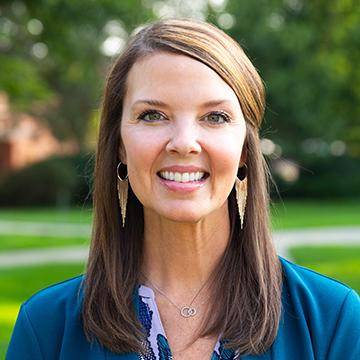
Abbie Baack, MSE
Instructor
Abbie Baack teaches education courses at Wayne State College. She serves as the advisor for the NSEA Aspiring Educators group.
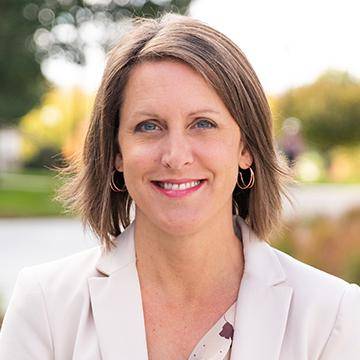
Johanna Barnes, Ed.D.
Professor
Dr. Johanna Barnes is an education professor at Wayne State College. She facilitates undergraduate and graduate courses in both in-person and online formats. Her teaching interests include effective practices in elementary mathematics, elementary methods, and instructional design.

Jean Dorcey, MSE
Instructor
Jean Dorcey teaches special education courses at Wayne State College.

Carol Erwin, Ed.D.
Professor
Dr. Carol Erwin is a family and consumer sciences professor at Wayne State College. Erwin's teaching interests include online teaching and learning, nutrition and foods classes in FCS, and working with FCS teacher education students.

Carolyn Glackin, Ed.D.
Assistant Professor
Dr. Carolyn Glackin is an education professor at Wayne State College.

Joni Irlmeier, Ed.D.
Professor
Dr. Joni Irlmeier is an education professor at Wayne State College. Her teaching interests include literacy in K-8 school systems, as well as professional communication.

Christian Legler, Ph.D.
Associate Dean and Coordinator for the MSE/MAT programs
Dr. Christian Legler is currently serving as Special Projects Manager and coordinator for the MSE Special Education graduate program, and the Master of Arts in Teaching program.
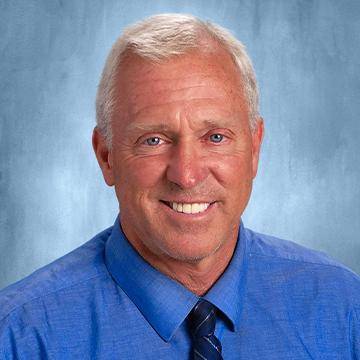
Kevin Lein, Ed.D.
Assistant Professor
Dr. Kevin Lein is an education professor at Wayne State College. His experience includes 15 years as a K-12 administrator and coach at every level and function; 25 years serving in higher education as an instructor, coach, and administrator; six years as a K-12 teacher; and various levels of involvement in educational government and leadership, including school board member.

Lucas Munter, MSE
Instructor
Lucas Munter is an education instructor at Wayne State College, teaching undergraduate level courses focusing on special educational needs (SENs).

Kristina Nelsen, Ph.D.
Associate Professor
Dr. Kristina Nelsen is an education professor at Wayne State College. She teaches undergrraduate and graduate special education courses.

Jenny Piening, DOT
Assistant Professor
Dr. Jenny Piening teaches in the School Administration graduate program.

Leigh Scruggs, Ph.D.
Associate Professor
Dr. Leigh Scruggs is an education professor at Wayne State College. She teaches undergraduate and graduate level courses focusing on special educational needs (SENs) in person and online.

Michael Sieh, Ed.D.
Assistant Professor and Coordinator for the School Administration MSE and Ed.S. programs
Dr. Michael Sieh is an education professor at Wayne State College and oversees the Education Specialist (Ed.S.) program, and the MSE in School Administration.

Kim Snyder, Ed.D.
Assistant Professor
Dr. Kim Snyder is an education professor at Wayne State College, where she also serves as chair of the Department of Educational Foundations and Leadership.

Ben Vilkas, Ed.D.
Associate Professor
Dr. Ben Vilkas is an education professor at Wayne State College, teaching courses focused on strategies for teaching English learners as well as courses on curriculum, assessment, and best instructional practices in the elementary school classroom setting.
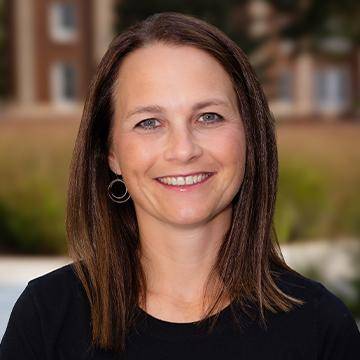
Sara Walsh, Ed.D.
Professor
Dr. Sara Walsh is an education professor at Wayne State College. She has implemented the co-teaching during clinical practice model, serves as the contact for this program, and leads the training workshops.
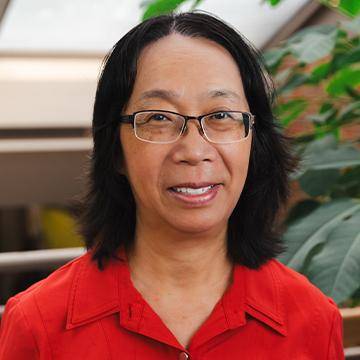
Linda Zhang, Ed.D.
Assistant Professor

Get in touch
Department of Educational Foundations and Leadership
Benthack Hall, Room 111
Phone: 402-375-7389
Your next steps