
Web Specialist Degree Program

Prepare for a career in web development by earning your Computer Information Systems degree with a Web Specialist concentration at Wayne State College in Nebraska.

A web specialist degree student works in a computer lab at WSC

Explore the Web Specialist degree program

If you're interested in designing, developing, and managing websites, the Web Specialist concentration prepares you with the technical and professional skills needed for careers in web development and related technology fields. You'll earn your bachelor's degree in Computer Information Systems while gaining a strong foundation in modern computing and specialized web development.

You'll begin with the Computer Information Systems core, where you'll study programming, software engineering, networking, databases, computer hardware, operating systems, artificial intelligence, and information systems. You'll then build on that knowledge through Web Specialist courses focused on web development, scripting languages, e-commerce technologies, and project management.

Graduates of the Web Specialist degree program are prepared for careers in web development, website management, software development, information technology, and other technology-focused roles. The combination of a broad computing foundation and specialized web development coursework provides the flexibility to pursue a variety of career paths or continue your education through graduate study.

View program courses  Download program fact sheet (PDF)

Fast facts

Degree options:


Delivery format: On campus (Wayne)


Program credit hours: 57

  • Computing core (36 credit hours)
  • Web Specialist concentration (21 credit hours)

Note: Students must also take 30 credit hours of General Studies courses. A total of 120 credit hours is needed to graduate from WSC. Additional majors or minors can be added to help meet graduation requirements.


School: Business and Technology


Department: Computer Technology and Information Systems

Prepare for your future

Opportunities and outcomes

Web specialist topics covered

  • Web development and advanced web development
  • Scripting languages
  • Software engineering and systems analysis
  • Database design and SQL
  • Networking fundamentals
  • E-commerce technologies
  • Project management
  • Artificial intelligence concepts
  • Computer hardware and operating systems

Student learning outcomes

  • Apply the foundational concepts of computer information systems
  • Work in team settings found in computer information systems contexts
  • Communicate in professional computer information systems contexts
  • Establish a plan for maintaining professional relevance in computer information systems
  • Apply an appropriate ethical framework to a computer information systems ethical dilemma

Career Scholars Program

Students majoring in Web Specialist are eligible to take part in the Career Scholars Program. The Career Scholars Program offers a generous scholarship package while you embark on a unique cooperative education journey starting your freshman year at Wayne State. During your time here, you’ll participate in career readiness activities, job site visits, job shadowing, and more - all while learning the fundamentals of professional practice. After three years on campus, you’ll complete your senior year by working at a paid job in your chosen field. Job locations include Norfolk or Grand Island, Neb., where you'll live in community housing with fellow Career Scholars students.

Career Scholars Program

Web specialist internships

The Academic and Career Success Center is available to help you find web specialist internships and career opportunities. Students recently completed internships at the following locations:

  • First National Bank of Omaha
  • Wayne State College
  • W.P. Engine

Career services and internships

Graduates of the Web Specialist degree program apply their programming, web development, and information systems skills in a variety of technology careers. Whether working for businesses, government agencies, educational institutions, or software companies, graduates help organizations develop, manage, and support websites, web applications, and digital services.

Jobs of recent graduates:

  • Customer Service Representative – F&M Bank/Card Center (South Sioux City, Neb.)
  • Information Technology Specialist – HCL Technologies (Columbus, Neb.)
  • Senior Fraud Prevention Specialist – First National Bank of Omaha (Wayne, Neb.)
  • Software Developer – Nucor Building Systems (Waterloo, Ind.)
  • Software Engineer – KBR (Sioux Falls, S.D.)

Percent of WSC graduates  employed or in grad school within 6 months of graduation

job or grad school placement rate
within six months of graduation

Data based on most recent
employment outcomes survey



2026-27 Estimated Annual Cost of Attendance

$209.50

tuition per credit hour

Tuition: $6,285

Fees: $2,351

Food plan: $4,950

Housing: $4,870

Total: $18,456
Estimates shown are for a typical undergraduate student taking 15 credit hours per semester for two semesters while living in a standard double occupancy room with a 225-meal block plan. They are estimated based on the current academic year. These figures do not include indirect cost estimates or course fees. To view a breakdown of estimated additional costs you may incur while attending WSC that are not billed to your student account, visit the Cost of Attendance page.
Cost of attendance

Least Expensive College in Nebraska

- CollegeTuitionCompare, 2025

Wayne State College is ranked the No. 1 least expensive four-year college in Nebraska and is recognized among the Top 10 most affordable colleges in the nation for out-of-state students. With the same tuition rates for in- and out-of-state students, a tuition guarantee, and generous scholarship opportunities, WSC makes earning a degree both accessible and affordable. In fact, the average remaining annual cost of attendance for 2024–25 is just $2,268 for undergraduate students after financial aid and scholarships.

Web Specialist degree program courses

Students must complete the computing core, support area, and the web specialist concentration courses. A total of 120 credit hours are needed to graduate from WSC. Additional majors or minors can be added to help meet graduation requirements.
 

36

Computing
core credits

+
21

Web specialist
concentration
credits

=
57

Total program
credits

Computing core courses (36 credits)

  • Credits: 3

    Description: An introduction and overview of modern computer systems, software design, information systems, and related technologies. Topics include computer hardware, software, communications, introductory algorithm design, basic networking concepts, computer ethics, and various other timely topics from the fields of computer science and/or computer information systems. 

  • Credits: 3

    Description: An introduction to networking concepts and technologies. Students will be introduced to the theory and practice of networking computers and various other devices.

  • Credits: 3

    Description: A study of basic software engineering approaches, tools, and methodologies. In addition, some coverage is provided regarding the structured approach to systems development through use of structured analysis methods within an established life cycle. Topics include: the systems development environment and life cycle, information gathering techniques, feasibility studies, cost/benefit analysis, software development alternatives, software selection techniques, modeling tools, data analysis methodologies, communication considerations and new system design.

    Prerequisite: CIS 130 or CIS 132. 

  • Credits: 3

    Description: A study of additional software engineering activities, approaches, tools, and methodologies. Topics include the systems design process, I/O design activities and strategies, file and database design, project management techniques, foundations and strategies of software design, software testing methods, CASE tools, user training, installation techniques, and evaluation processes. Systems/applications support and maintenance, plus scalability issues are also addressed. 

    Prerequisite: CIS 360 Software Engineering I

  • Credits: 3

    Description: A study of database theory, design, and management through application development and implementation. Topics include: database planning and organization, common database models, normalization, the total DBMS concept, logical and physical model design, program database strategies control and recovery, security and integrity, query application, and advanced database topics. Emphasis is placed on application assignments that encompass topics/concepts presented in the course.

    Prerequisite: CIS 130 Introduction to Computer Information Technology or 132 Principles of Computing and Information Systems, or CSC 150 Programming Fundamentals I

  • Credits: 3

    Description: A study of computer hardware and operating systems. This course covers hardware components of a variety of types and explores both proprietary and open-source operating systems. Emphasis is placed on proper design and operation, troubleshooting, and basic management/maintenance of hardware and the operating systems that run on it.

    Prerequisite: CIS 130 Introduction to Computer Information Technology or 132 Principles of Computing and Information Systems

  • Credits: 3

    Description: Emphasis is on providing breadth of knowledge in the organizational concepts and considerations surrounding the use of information systems technologies such as computer systems and communications systems. Topics include role of information systems in managerial functions, general systems theory, design and implementation of Management Information Systems (MIS), decision support systems, expert systems, and artificial intelligence.

  • Credits: 3

    Description: A capstone course with emphasis on the management of information systems. Emphasis is placed on operational, tactical, and strategic issues related to information systems management. Consideration is given to traditional and emerging information systems issues and topics. Students will work with theoretical and practitioner literature from the information systems field in addressing several cases and/or projects and in preparing and delivering presentations.

    Prerequisite: Completion of 90 credit hours

  • Credits: 3

    Description: An introduction to modern programming and problem-solving methods using a high-level programming language. Emphasis on algorithm development, top-down design, and structured programming. Topics include data types, files, I/O operations, control structures, functions, arrays, strings, and records. Software documentation and testing will be included as an integral part of the course.

  • Credits: 3

    Description: An introduction to the development and implementation of pages for the World Wide Web. Introductory use of web programming language(s) and web development tools will be introduced. This course will also address introductory-level development methodologies, layout, functionality, content creation, and basic content management.

  • Credits: 3

    Description: This course addresses the historical development of artificial intelligence (AI), the types of AI, the uses of AI, and the frontiers of development for the future of AI. The course presents an overview of the underlying technologies used in AI. It examines the economic, social, ethical, technological, regulatory, political, and related considerations surrounding the creation, use, and management of AI.  

  • Credits: 3

    Description: An overview of the structure and design of an operating system – the software interface between the user and the hardware. Topics include process management, memory management, device management, file management, concurrency, distributed systems, and security.

Web specialist concentration courses (21 credits)

  • Credits: 3

    Description: This course explores the many facets in the field of cybersecurity. The course introduces students to the contexts in which cybersecurity is considered and applied, the threats to cybersecurity that have emerged, and approaches to anticipating emerging threats. Strategies for identifying, assessing, avoiding, mitigating, addressing, and responding to threats are presented. Tools, techniques, policies, procedures, and resources for cybersecurity managers and practitioners are introduced and examined.

  • Credits: 3

    Description: This course is an introduction to the world of electronic commerce and various other forms of electronic interaction. The course provides an overview of the basic technology of the Internet and World Wide Web. It also discusses strategic, tactical, and operational issues faced by online business firms and various other types of organizations. Marketing, financing, infrastructure, choice of online business model, and many other considerations are explored.

  • Credits: 3

    Description: This is an advanced course that emphasizes operational, tactical, and strategic-level considerations in integrating and applying software engineering tolls, techniques, theory, and practical approaches in single-project and multi-project environments. Students will complete one or more significant software engineering projects demonstrating the ability to apply what they have learned.

    Prerequisites: CIS 361 Software Engineering II

  • Credits: 3

    Description: This course provides an introduction to the management of projects. Emphasis is placed on both the technical aspects of the project management process and the management of the human behavioral/situational aspects of projects. The nature of projects is explored. The techniques and tools of project management are introduced. Operational, tactical, and strategic implications of project management approaches are considered. The use of current project management software is incorporated. Students are also provided with an understanding of the many environmental and behavioral issues surrounding project management, and approaches to dealing with these issues. Graduate students in these courses have additional requirements beyond those for the undergraduate students.

  • Credits: 3

    Description: An intermediate web development course that provides an exploration of the programming language that produces dynamic and interactive web sites. It addresses the fundamentals of client-side scripting to manipulate web page content in real-time.  

    Prerequisite: CSC 165 Web Development I

  • Credits: 3

    Description: This course provides an in-depth exploration of full stack application development, covering both front-end and back-end technologies. Students will learn to design, build, and integrate user interfaces, server-side logic, databases, and APIs into cohesive applications. Emphasis is placed on modern development frameworks, deployment strategies, and best practices for scalability, maintainability, and security. Practical projects reinforce the complete development lifecycle from concept to deployment.

    Prerequisite: CIS 132 Principles of Computing and Information Systems or CSC 150 Programming Fundamentals I

  • Upper-level CIS or CSC course (3 credits) – For a complete listing of courses and their descriptions, view the course catalog.

Popular pairings

Many students at Wayne State will add a second major or a minor to complement their program of study, or to focus their studies on a specific topic. Students who were recently in the Web Specialist program at Wayne State also paired this major with one or more of the following programs:

View all majors and minors

Related programs

Students interested in the Web Specialist program may also be interested in:

Integrated Technology Support (B.A. or B.S.)
Networking and Cybersecurity (B.A. or B.S.)
Systems Engineering (B.A. or B.S.)

Students in the WSC Student Center

Transfer to Wayne State

Our generous transfer credit policy will allow you to get credit for what you've already earned.

Transferring to Wayne State

Get in touch

Department of Computer Technology and Information Systems
Gardner Hall, Room 106
Phone: 402-375-7245

Visit the Department

Student clubs for computing and information technology

Students gather at a table outside the library

Rankings and accolades

Recognized for excellence

Best Colleges in Nebraska for Computer Information Sciences

Ranked among Nebraska’s top programs for Computer Information Sciences in CollegeRaptor’s 2026 Best Colleges rankings.

Learn more

Best Colleges for Computer Information Sciences degree 2026

A Best College of Distinction

Wayne State College is one of only two public colleges in Nebraska recognized as a Best College of Distinction for excellence in teaching, student engagement, campus community, and student success.

Learn more

Best College of Distinction 2026-27 award badge

A Top Public College in the Midwest

Wayne State College is ranked among the top public colleges in the Midwest for 2026 by U.S. News & World Report, reflecting strong academics and student outcomes.

Learn more

top public colleges in u.s. award badge

Where you'll learnDepartment facilities

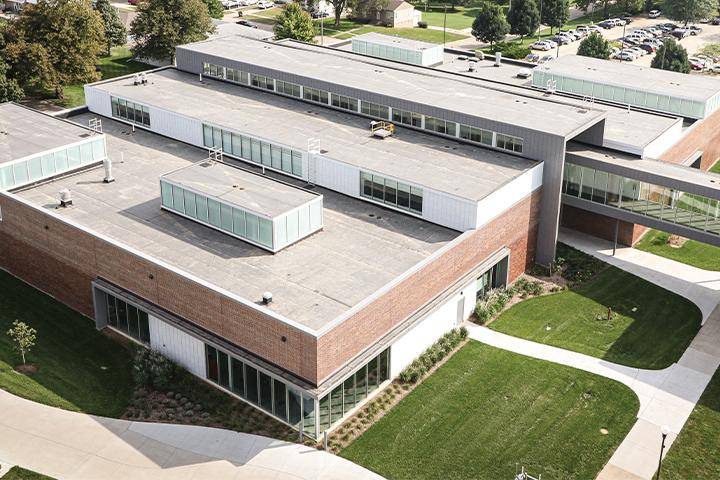
The Center for Applied Technology at Wayne State College

Center for Applied Technology (CAT)

The CAT is home to the Department of Technology and Applied Science and features state-of-the-art labs and tech-savvy classrooms.

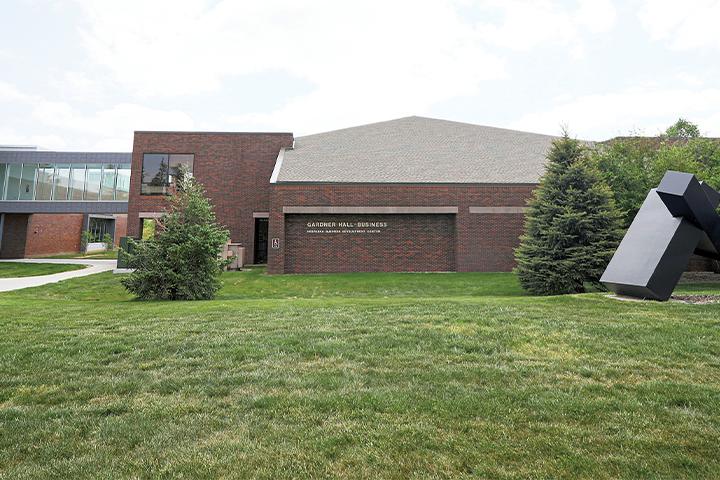
Gardner Hall at Wayne State College

Gardner Hall

Gardner Hall is home to the Department of Business and Economics at WSC and connects to advanced computer labs in the Center for Applied Technology by skywalk.