International Business Studies Degree Program

Study international business and earn your bachelor’s degree at Wayne State College in Nebraska.

International business degree concept featuring a business district in a foreign country

Explore the International Business Studies degree program

As the world becomes increasingly interconnected, businesses are expanding their operations globally. Studying international business can help you understand the complexities of international trade and the factors that influence global markets.

In the International Business Studies degree program at Wayne State, you will build a solid foundation of business knowledge in finance, marketing, operations, and management. You will also learn how to apply those skills in the global environment of business, while taking into consideration the different cultures and perspectives on decision making. This can lead to a wide range of career opportunities in various fields, as many multinational corporations seek employees with a strong understanding of global business practices.

The International Business Studies degree program at Wayne State will prepare you well for careers in business, marketing, finance, accounting, management, law, and government. As you learn to understand global issues such as poverty and sustainability, you can even gain an understanding of how businesses can contribute to addressing these issues and make a positive impact on society. Be sure to check out our study abroad program for opportunities to travel overseas and broaden your perspective. This can help you develop cross-cultural communication skills, which Is important in today’s global business environment.

View program courses  Download program fact sheet (PDF)

Fast facts

Degree options:


Delivery format: On campus (Wayne)


Program credit hours: 63

  • Business foundation (21 credit hours)
  • Business core (24 credit hours)
  • International business studies concentration (18 credit hours)

Note: Students must also take 30 credit hours of General Studies courses. A total of 120 credit hours is needed to graduate from WSC. Additional majors or minors can be added to help meet graduation requirements.


School: Business and Technology


Department: Business and Economics

Prepare for your future

Opportunities and outcomes

International business studies topics covered

  • Evaluation and analysis of international economics
  • Fundamentals of globalization and the global economy
  • Principles of international trade, finance, and foreign investment
  • Cultural awareness and geographic relationships
  • Legal and ethical standards of business
     

Student learning outcomes

  • Demonstrate an understanding of the core areas of business, which includes accounting, economics, management, quantitative business, finance, marketing, legal environment, information systems, and international
  • Demonstrate effective skills in written and oral communication in business settings
  • Work effectively in a team environment
  • Apply ethical frameworks to formulate management decision alternatives

Career Scholars Program

Students majoring in International Business Studies are eligible to take part in the Career Scholars Program. The Career Scholars Program offers a generous scholarship package while you embark on a unique cooperative education journey starting your freshman year at Wayne State. During your time here, you’ll participate in career readiness activities, job site visits, job shadowing, and more - all while learning the fundamentals of professional practice. After three years on campus, you’ll complete your senior year by working at a paid job in your chosen field. Job locations include Norfolk or Grand Island, Neb., where you'll live in community housing with fellow Career Scholars students.

Career Scholars Program

International business studies internships

The Academic and Career Success Center is available to help you find business internships and career opportunities. Students recently completed internships at the following locations:

  • Associated Wholesale Grocers
  • Case Industries, LLC
  • Columbus Motor Company
  • Michael Foods
  • Shyft Group

Career services and internships

Graduates of the International Business Studies degree program work in their chosen field using the skills they learned while at Wayne State College. Each year, eager employers welcome WSC graduates into their organizations.

Jobs of recent graduates:

  • Admissions Coordinator – Little Priest Tribal College (Winnebago, Neb.)
  • Abroad Teacher – Go Overseas (Czechoslovakia)
  • Commodities Broker – Knobbe Commodities, Inc. (West Point, Neb.)
  • Interpreter – Yokogawa (Ulaanbaatar, Mongolia)
  • Outdoor Education Instructor – YMCA of the Rockies (Estes Park, Colo.)
  • Senior Fraud Prevention Specialist – First National Bank of Omaha (Omaha, Neb.)
  • Scheduler – Interbake Foods (North Sioux City, S.D.)
  • Universal Banker – Heartland Bank (Columbus, Neb.)

Public disclosure of student achievement

    Percent of WSC graduates  employed or in grad school within 6 months of graduation

    job or grad school placement rate
    within six months of graduation

    Data based on most recent
    employment outcomes survey


    After graduating from Wayne State College, recent grads pursued advanced degrees at the following schools:

    • Business Administration (MBA) – Grenoble Ecole de Management (Grenoble, France)
    • Business Administration (MBA) – Wayne State College (Wayne, Neb.)

    2026-27 Estimated Annual Cost of Attendance

    $209.50

    tuition per credit hour

    Tuition: $6,285

    Fees: $2,351

    Food plan: $4,950

    Housing: $4,870

    Total: $18,456
    Estimates shown are for a typical undergraduate student taking 15 credit hours per semester for two semesters while living in a standard double occupancy room with a 225-meal block plan. They are estimated based on the current academic year. These figures do not include indirect cost estimates or course fees. To view a breakdown of estimated additional costs you may incur while attending WSC that are not billed to your student account, visit the Cost of Attendance page.
    Cost of attendance

    Least Expensive College in Nebraska

    - CollegeTuitionCompare, 2025

    Wayne State College is ranked the No. 1 least expensive four-year college in Nebraska and is recognized among the Top 10 most affordable colleges in the nation for out-of-state students. With the same tuition rates for in- and out-of-state students, a tuition guarantee, and generous scholarship opportunities, WSC makes earning a degree both accessible and affordable. In fact, the average remaining annual cost of attendance for 2024–25 is just $2,268 for undergraduate students after financial aid and scholarships.

    International Business Studies degree program courses

    Students must complete the business foundation, business core, and international business studies concentration courses. A total of 120 credit hours are needed to graduate from WSC. Additional majors or minors can be added to help meet graduation requirements.
     

    21

    Business
    foundation
    credits

    +
    24

    Business
    core
    credits

    +
    18

    International
    business studies
    concentration
    credits

    =
    63

    Total
    program
    credits

    Business foundation courses (21 credits)

    You must complete each of the foundation courses (below) with a grade of "C" or better, and accumulate at least 45 semester credit hours before taking the business core courses. You may otherwise receive conditional admission to the Business Administration program with approval from the Department of Business and Economics Admission Committee.

    • Credits: 3

      Description: Development of critical communication skills used in business and industry. Emphasis on assisting Business students to become more effective and efficient writers. Includes instructions, reports, memos, and letters.

      Prerequisite: ENG 102 Composition Skills

    • Credits: 3

      Description: Introduction to the study of law, the law of contracts, agency and employment, negotiable instruments, personal property and bailments, and the laws governing the sale of goods.

    • Credits: 3

      Description: A study of the following statistical tools as applied to the business and economic milieu: collection and presentation of data, distributional measurements, probability and sampling, statistical inferences, linear regression and correlation, analysis of variance, and selected nonparametric statistics.

      Prerequisite: MAT 105 Intermediate Algebra, or General Studies math requirement

    • Credits: 3

      Description: A study of the role of accounting in the business environment. Emphasis is on applying basic terminology, concepts, processes, and outputs of the modern accounting system; development of an understanding of the nature and purpose of the major financial statements; and development of the ability to evaluate financial accounting information in problem-solving and decision making.

    • Credits: 3

      Description: Continuation of BUS 240 Accounting I. Emphasis is on further study of items reported within major financial statements and development of the ability to evaluate managerial accounting information in problem-solving and decision making.

      Prerequisite: BUS 240 Accounting I

    • Credits: 3

      Description: In this course, the principal macroeconomic measurements of national production; unemployment and inflation will be introduced. Theories of how these measures interact and how they are influenced by activity in households, businesses, the federal government, and the Federal Reserve System, as well as the impact of international trade, will also be studied.

    • Credits: 3

      Description: In this course, the principal microeconomic market model of supply and demand will be studied. Additional topics introduced to add to our understanding of the basic model will include resource allocation concepts, production and cost theory, consumer theory, and market structure conditions.

    Business core courses (24 credits)

    • Credits: 3

      Description: Develops the management art and science of planning, organizing, actuating, and controlling through people to make ideas materialize within economic constraints of a business enterprise. Develops ability to construct policy, to make scientifically sound decisions within that policy, and to establish ethical procedures to insure organized productive effort to intended objectives. Develops a management attitude, outlook, and ability.

    • Credits: 3

      Description: Survey of the problems and opportunities involved in conducting business operations across national boundaries. Analysis of the concepts, tools, institutions, and environmental factors controlling international flows of money, personnel, information, goods, and services.

    • Credits: 3

      Description: This course facilitates students in conquering the essential concepts of product, price, promotion, distribution, segmentation, ethics, and social responsibility, while addressing the evolving digital and social media influences. The fundamentals will be stressed allowing for useful decision processes by managers while encouraging the development of the marketing specialist as one of the key decision makers in a firm. Marketing is critical to implementing strategy, gaining competitive advantages, and ensuring positive organizational results.

    • Credits: 3

      Description: A study of the financial function within a business enterprise. Areas addressed include financial analysis, working capital management, capital budgeting, sources and forms of long-term financing, financial structure, and cost of capital.

      Prerequisites: BUS 226 Business Statistics, and BUS 241 Accounting II or BUS 142 Survey of Accounting

    • Credits: 3

      Description: Successfully managing operations is vital to the long-term viability of every type of organization. This course provides a broad overview of issues in operations and supply chain management emphasizing a strategic orientation toward design and improvement issues. Specific topics include competitiveness; operations strategy; quality management; statistical process control; design of products, services, processes, and facilities; forecasting; supply chain management; logistics; project management; inventory management; lean production; and scheduling.

    • Credits: 3

      Description: This course will examine theoretical structures that shape or influence Western thought and review specific professional codes of ethics relevant to business majors. Students will learn a decision-making framework for examining and articulating well-reasoned positions on ethical issues in business.

    • Credits: 3

      Description: This course focuses on public, administrative, and regulatory law, and the relationship of business to the legal structure. Topics include employee and consumer protection, environmental regulation, labor law, monopolies, price-fixing, and the regulation of domestic and international trade.

    • Credits: 3

      Description: Involves analysis of cases in which knowledge from basic courses in marketing, accounting, finance, management, and economics is integrated and applied. Demonstrated interrelationship between the functions of business, complexities of business problems, and strategic management models are addressed.

      Prerequisites: BUS 270 Principles of Marketing, BUS 322 Managerial Finance, BUS 352 Operations and Supply Chain Management, or instructor approval; and completion of 105 semester credit hours

    International business studies concentration courses (18 credit hours)

    • Credits: 3

      Description: This course prepares students to lead and manage organizations in a highly competitive environment. Students will understand and identify methods for improving and maintaining aspects of individual and organizational performance. The course includes an examination of management and the applied behavioral sciences; organizational goals, training and performance; organizational culture; motivation and behavior; building effective relationships; planning and implementing change; leadership strategies; and integrating situational leadership.

    • Credits: 3

      Description: Current or special issues in a changing global economy will be examined in a multi-disciplinary approach. The course offers students the opportunity to research and discuss current issues facing society and the impact on functional areas of international business, such as marketing, finance, banking, economics, management, and human resources. Note: Course may not be repeated.

      Prerequisite: Admission to the Business Administration program.

    • Credits: 3

      Description: The economic motivation of consumers and producers will be explored in the context of individual markets, the national economy, and international trade. Applying economic concepts to current events and policy issues will be emphasized.

    • Credits: 3

      Description: A study of the principles and theories of international trade, finance, foreign investment, barriers to trade, and international economic cooperation. This course provides the necessary tools to interpret, evaluate, and analyze the changing international economy.

      Prerequisite: 3 hours of economics

    • Select one of the following:

      • GEO 300 Human Geography (3 credits) - Application of geographic principles to examine the social, economic, and political activities of human cultures. Emphasis is on the concepts of culture, culture areas, migration, diffusion, social space, territoriality, environmental perception, and cultural landscape.
      • GEO 315 World Economic Geography (3 credits) - A study of resource use, locational choices, and regional specialization in the global economy. Special emphasis is given to the factors involving uneven patterns of social and economic development and the impact of globalization at various scales.

      Plus select one of the following:

      • GEO 340 Geography of the US and Canada (3 credits) - A regional analysis of the United States and Canada in terms of economic activities and the physical environment. Special emphasis is on the historical development of the U.S. and Canadian landscapes.
      • GEO 350 Geography of Europe (3 credits) - This course provides a regional analysis of Europe in terms of its physical environment, history, culture, political systems, and economic activities. Topics emphasized include Europe’s global influence, unification efforts, and east-west regional contrasts.
      • GEO 360 Geography of Russia (3 credits) - A regional survey of the territory of Russia and the newly independent states that emerged from the breakup of the USSR. The focus of the course is on human, physical, and historical geography of the 15 countries in the region, which includes parts of Eastern Europe and Central Asia. Issues to be addressed include recent efforts toward economic restructuring, relations among the former republics and nationalities, and current events/problems.
      • GEO 370 Geography of Latin America (3 credits) - A regional survey of Latin America in terms of its physical environment, history, culture, economic development, political systems, and demographic trends.
      • GEO 380 Geography of Asia (3 credits) - A regional analysis of South, Southeast, and East Asia in terms of the people, economic activities, and physical environment.

    Popular pairings

    Many students at Wayne State will add a second major or a minor to complement their program of study or to focus their studies on a specific topic. Students who recently majored in International Business Studies at Wayne State also paired this major with one or more of the following programs:  

    View all majors and minors

    Related programs

    Students interested in the International Business Studies program may also be interested in:

    Business Management (B.A. or B.S.)
    Organizational Leadership and Public Relations (B.A. or B.S.)

    Students in the WSC Student Center

    Transfer to Wayne State

    Our generous transfer credit policy will allow you to get credit for what you've already earned.

    Transferring to Wayne State

    Get in touch

    Department of Business and Economics
    Gardner Hall, Room 106
    Phone: 402-375-7245

    Visit the Department

    Student clubs for international business majors

    Students gather at a table outside the library

    Accreditation and Rankings

    Recognized for excellence

    Best College in Nebraska for Business Administration

    Ranked No. 1 in Nebraska for Business Administration in CollegeRaptor’s 2026 Best Colleges rankings for program quality and value.

    Learn more

    Best College for Business Administration degree award badge

    Accredited by the IACBE

    Wayne State's Business degree programs are accredited by the International Accreditation Council for Business Education and comply with high principles of excellence.
    Our IACBE accreditation

    IACBE accredited member

    A Top Public College in the Midwest

    Wayne State College is ranked among the top public colleges in the Midwest for 2026 by U.S. News & World Report, reflecting strong academics and student outcomes.
    Learn more

    top public colleges in u.s. award badge

    Best Business College of Distinction

    Wayne State was recognized as a Business College of Distinction for teaching excellence, successful graduate outcomes, and student opportunities. 

    Learn more

    Best Business College of Distinction award badge

    Where you'll learnDepartment facilities

    Gardner Hall at Wayne State College

    Gardner Hall

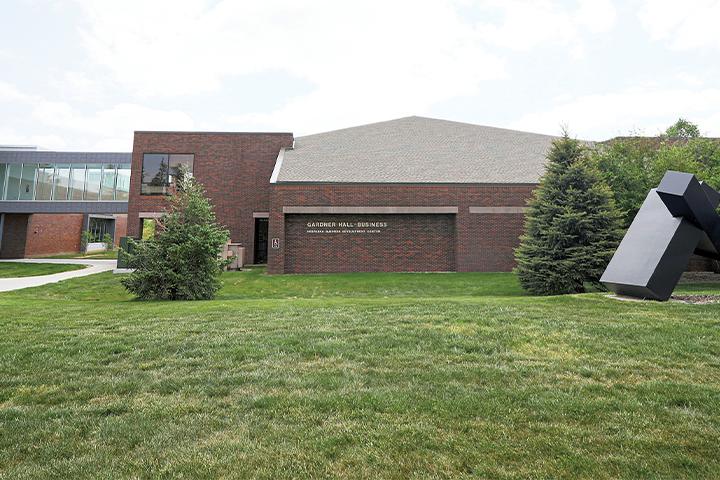
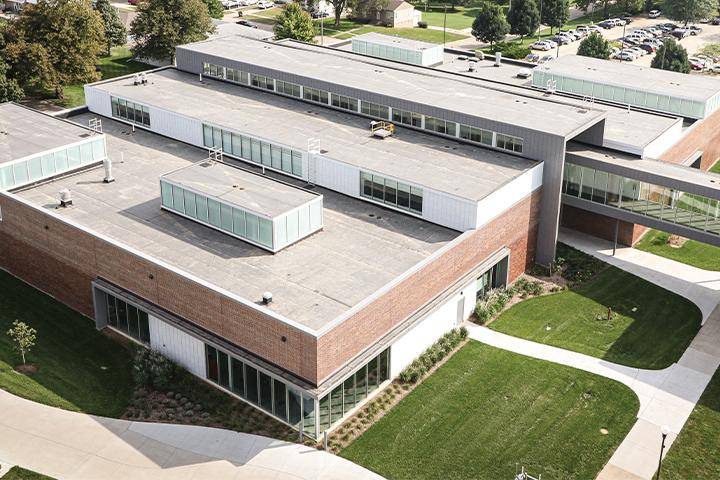
    Gardner Hall is home to the Department of Business and Economics at WSC and connects to advanced computer labs in the Center for Applied Technology by skywalk.

    The Center for Applied Technology at Wayne State College

    Center for Applied Technology (CAT)

    The CAT is home to the Department of Technology and Applied Science and features state-of-the-art labs and tech-savvy classrooms.