Explore the Interior Design degree program
From the most extravagant rooms to the simplest offices, every interior needs attention to the lighting, flooring, wall treatments, and furniture. As an interior designer, you’ll work with clients to design and create functional and aesthetically pleasing interior spaces. You’ll have the opportunity to make a difference in people’s lives by improving the spaces they inhabit.
At Wayne State, you’ll develop your artistic, interpersonal, and management skills. You’ll learn design principles, color theory, space planning, construction techniques, and technical drawing using industry-standard software so you can work on real-world design projects.
Depending on your interests, an Interior Design degree can open a range of careers in a variety of settings including residential and commercial spaces, television and film sets, museums and galleries, and even furniture and textile companies.
If you have a passion for design and a desire to create beautiful and functional spaces, the Interior Design degree program at Wayne State can help you turn your passion into a fulfilling and personally rewarding career.
Fast facts
Degree options: B.A. or B.S. in Family and Consumer Sciences/Interior Design
Delivery format: On campus (Wayne)
Program credit hours: 63
- Industrial Technology core (30 credit hours)
- Interior Design concentration (33 credit hours)
Note: Students must also take 30 credit hours of General Studies courses. A total of 120 credit hours are needed to graduate from WSC. Additional majors or minors can be added to help meet graduation requirements.
School: Business and Technology
Department: Technology and Applied Science
Opportunities and outcomes
Interior design topics covered
- Consumer economics
- Principles of marketing and real estate
- Influence of design and architecture on human behavior
- Interior design techniques and technical drawing
- Residential drawing with computer-aided design (CAD) software
- Construction and selection of household technology
- Soft furnishings and textiles
- Finishing materials and techniques
- Principles of design, color, furniture, materials, and accessories
- Designing for residential, commercial, and retail spaces
- Interior design codes and regulations
- Accounting for non-business majors
- Art history and multicultural arts
- Professional development and presentation
Student learning outcomes
- Demonstrate professional communication skills in family and consumer sciences settings
- Apply knowledge from their program of study to current and future issues in family and consumer sciences
- Utilize critical thinking for problem solving in family and consumer sciences settings
Career Scholars Program
Students in the Interior Design program are eligible to take part in the Career Scholars Program. The Career Scholars Program offers a generous scholarship package while you embark on a unique cooperative education journey starting your freshman year at Wayne State. During your time here, you’ll participate in career readiness activities, job site visits, job shadowing, and more - all while learning the fundamentals of professional practice. After three years on campus, you’ll complete your senior year by working at a paid job in your chosen field. Job locations include Norfolk or Grand Island, Neb., where you'll live in community housing with fellow Career Scholars students.
Interior design internships
Our outstanding Career Services Office is available to help you find fashion merchandising internships and career opportunities. Students recently completed internships at the following locations:
- Heritage Homes of Nebraska
- Homestead Homes
- MOD House Interiors
- Spaces Interior Design
Graduates of the Interior Design degree program work in their chosen field using the skills they learned while at Wayne State College. Each year, eager employers welcome WSC graduates into their organizations.
Jobs of recent graduates:
- Designer – Central Kitchen & Bath (Sioux City, Iowa)
- Design Consultant – Homestead Homes (Wayne, Neb.)
- Designer/Drafter – Dewitt Design (Sioux Falls, South Dakota)
- Interior Designer – Lee Douglas Interiors (Omaha, Neb.)
- Interior Designer/Drafter – The Kitchen Place (Yankton, South Dakota)

job or grad school placement rate
within six months of graduation
Data based on most recent
employment outcomes survey

2025-26 Estimated Annual Cost of Attendance
cost per credit hour
Tuition: $6,057
Fees: $2,351
Food plan: $4,830
Housing: $4,870
Least Expensive College in Nebraska
- CollegeTuitionCompare, 2025
Wayne State College is ranked the No. 1 least expensive four-year college in Nebraska and is recognized among the Top 10 most affordable colleges in the nation for out-of-state students. With the same tuition rates for in- and out-of-state students, a tuition guarantee, and generous scholarship opportunities, WSC makes earning a degree both accessible and affordable. In fact, the average remaining annual cost of attendance for 2024–25 is just $2,268 for undergraduate students after financial aid and scholarships.
Interior Design degree program courses
Students must complete the industrial technology core courses and the interior design concentration courses. A total of 120 credit hours are needed to graduate from WSC. Additional majors or minors can be added to help meet graduation requirements.
Industrial technology
core credits
Interior Design
concentration
credits
Total program
credits
Industrial technology core courses (31 credits)
Note: Industrial Technology majors should take MAT 110 Contemporary Applications of Mathematics to meet the General Studies CAT 3 requirement and PHS 102 Physical Sciences Today to meet CAT 7. ITE 111 is a prerequisite or co-requisite to all ITE courses (or by approval of department chair).
Credits: 3
Description: Selected topics of environmental concerns to be presented by the laboratory-oriented approach, and in compliance with the requirements of General Studies. Does not apply to any major, minor, or endorsement in any science area (BIO, CHE, EAS, NAT) unless specified. Four hours lecture-lab combined
Credits: 3
Description: Development of critical communication skills used in business and industry. Emphasis on assisting business students to become more effective and efficient writers. Includes instructions, reports, memos, and letters.
Prerequisite: ENG 102 Composition Skills
Credits: 3
Description: This course concentrates on the skills needed by first-line supervisors. Issues covered include the following: supervisor’s job description, organizing an effective department, acquiring employees, motivation, effective leadership, communication skills, supervising groups and work teams, labor relations and supervisory challenges in the 21st century.
Credits: 3
Description: This course provides an introduction to the management of projects. Emphasis is placed on both the technical aspects of the project management process and the management of the human behavioral/situational aspects of projects. The nature of projects is explored. The techniques and tools of project management are introduced. Operational, tactical, and strategic implications of project management approaches are considered. The use of current project management software is incorporated. Students are also provided with an understanding of the many environmental and behavioral issues surrounding project management, and approaches to dealing with these issues. Graduate students in these courses have additional requirements beyond those for the undergraduate students.
Credits: 3
Description: This course examines the fundamentals of creating a safe and healthy work environment. Topics focus on reducing injuries, identifying common safety hazards, and safely operating specific machines and tools in the Center for Applied Technology building labs. This course also includes training in American Heart Association’s (AHA) Heartsaver First Aid Cardiopulmonary Resuscitation (CPR) and Automated External Defibrillator (AED) use. These training sessions are designed to prepare students to provide first aid and CPR, and how to use an AED in a safe timely, and effective manner. Students will have the opportunity to earn certifications through a 10-hour OSHA Safety card (does not expire) and a First Aid CPR AED (valid for two years). ITE majors must pass with a C or better. Class fee of $35 required
Credits: 3
Description: An introductory course of engineering and technology principles. Designed to provide a foundation of knowledge and skills for all Industrial Technology, Skilled and Technical Sciences (STS) and undeclared majors. Engineering concepts along with new technology will be utilized in the design and production of products made. Students will employ problem-solving, research and design, and interpersonal communication skills as they work through the assigned classroom and lab activities. Lecture and lab combined. ITE majors must pass with a C or better. Class fee of $25 required.
Credits: 3
Description: This course covers the proper care and operation of various hand and power tools used in residential and light commercial construction, basic masonry, and carpentry practices; framing, interior and exterior finishing; reading and interpreting of building blueprints and specifications with actual application of the competencies necessary to complete various construction projects. Course also covers the processes of design, estimating, planning, and the contractor’s role in scheduling. Lecture and lab combined. ITE majors must pass with a C or better. Class fee of $25 required.
Credits: 3
Description: An exploratory course introducing students to the five areas of the manufacturing industry. Hands-on lab activities will reinforce lessons in sheet steel and aluminum, plastics, wood, and the foundry. Appropriate material selection, process selection, safety, use of manufacturing and industrial tools and equipment, and measurement will be presented. Lecture and lab combined. ITE majors must pass with a C or better. Class fee of $25 required.
Credits: 3
Description: This course explores the fundamentals of residential drawing and the application of computer aided drafting. Students develop skills in sketching, home planning, design, layout and building material selection for residential structures, zoning, an introduction to code requirements, building permits process and energy audits. Students are required to complete a full set of construction documents to include floor plans, foundation plans, elevations, kitchen and bath plans, detail drawings, specific notes, and a 3D rendering. Lecture and lab combined. ITE majors must pass with a C or better. Class fee of $25 required.
Credits: 3
Description: This course fosters a solid understanding of the mathematics applicable for trade and technical environments. Topics include measurement, proportions, solving equations, rational expressions, geometric measures, trigonometry, and statistics. This course is intended for Industrial Technology majors.
Interior design concentration courses (33 credits)
Credits: 3
Description: Introduction to the many types of finishing materials and techniques used in modern architectural designs and on industrial goods. Residential, commercial, and industrial finishes will be explored, and students will practice several application techniques on personal or departmental projects. Lecture and lab combined.
Credits: 3
Description: The study and discussion of concepts, issues, and resolutions in which research of human behavior is influenced by built environment. Use of communication skills, problem-solving, and media to design interior environments. An exploration of sustainable design and its effects on interior design, architecture, city planning, and landscape design.
Credits: 3
Description: Study of design process as it applies to interior spaces. Emphasis on problem-solving and communication skills in space planning. Course will include detailing interior drawings and plans using multiple mediums. Careers in interior design will be explored. Lecture and lab combined.
Credits: 3
Description: This course introduces the many types of finishing materials and techniques used in modern architectural designs and on industrial goods. Residential, commercial, and industrial finishes will be explored, and students will practice several application techniques on personal or departmental projects.
Credits: 3
Description: This course builds on skills and information learned in ITE 214. Students design a residential project limited in size by the instructor. The project includes a full set of working drawings. Zoning ordinances, local building code, International Building Codes, and energy efficiency are incorporated into all the projects. Topics will include IRC Code as it applies to build types, occupancy types, materials, and ratings for commercial design. Software used will allow students to produce 2D construction documents as well as 3D Building Information Models (BIM). Lecture and lab combined. ITE majors must pass with a C or better. Class fee of $25 required.
Prerequisite: ITE 214 Residential Drawing
Credits: 3
Description: A study of architectural housing styles, future trends in housing, housing selection as it concerns the family during stages of the family life cycle. Floor plans, furniture arrangement, elements and principles of design, color theory, and their application to housing will be covered.
Credits: 3
Description: A study of the construction, selection, use, and care of appliances and other technology used in the home; the basic principles in the use of gas and electricity in the home; safety and energy conservation of household technology.
Credits: 3
Description: Advanced study of the elements and principles of design, color, period decoration and furniture, and residential design, pictorial drawings, materials, and accessories. Client projects, sample boards, and client presentations will be emphasized. Professional practices of design will be explored. Lecture and lab combined.
Prerequisite: FCS 242 Techniques of Interior Design, or instructor permission
Credits: 3
Description: Comprehensive study of design components and its effect on commercial and retail spaces. Continuing emphasis on problem-solving and communication skills. Expanded application of interior design codes and regulations that are applied to designed interiors.
Prerequisite: FCS 242 Techniques of Interior Design, or instructor permission
Credits: 3
Description: The students will demonstrate the role of a contractor through the design and construction phases of a construction project. They will be responsible for planning, organizing, staffing, directing, and controlling labor and material. They will also work with equipment utilization, cost estimation and pricing, cost control, and accounting throughout the various phases of a construction project.
Choose one of the following courses:
- ART 101 Design (3 credits) - Study of two-dimensional and three-dimensional design elements and principles applied to imagery and spatial concepts. Emphasis on visual communication and problem solving through creative thinking, concepts, media, skills, processes, and research. Critical discourse, basic color theory and composition will be integral parts of the course. Students will design a digital portfolio. Class fee: $60.
- ART 110 Drawing (3 credits) - An introduction to foundational concepts and techniques in the study of line, shape and form, light and shadow, linear and atmospheric perspective. Formal concerns regarding composition will be explored and selection of subject matter will be from the figure, still life, landscape, and nature. Class fee: $60.
- ART 101 Design (3 credits) - Study of two-dimensional and three-dimensional design elements and principles applied to imagery and spatial concepts. Emphasis on visual communication and problem solving through creative thinking, concepts, media, skills, processes, and research. Critical discourse, basic color theory and composition will be integral parts of the course. Students will design a digital portfolio. Class fee: $60.
Popular pairings
Many students at Wayne State will add a second major or a minor to complement their program of study or to focus their studies on a specific topic. Students who recently majored in Interior Design at Wayne State also paired this major with one or more of the following programs:
- Art (minor)
- Business Administration (minor)
- Drafting and Design (major or minor)
Related programs
Students interested in the Interior Design program may also be interested in:

Transfer to Wayne State
Our generous transfer credit policy will allow you to get credit for what you've already earned.
- If you've taken courses at other institutions, you can transfer those credits to Wayne State.
- Already have an associate degree? Seamlessly transfer your full degree through one of our transfer pathways.
- Military or veteran student? You may be able to get credit for your military experience and training.
I chose Interior Design because I love making and transforming things. I've always been art savvy, so I decided that Interior Design would both challenge me and be fun. Wayne State's faculty really help prepare you for the future. They are more than willing to help with classes and anything in between. They really become like your college parents and just want to make sure you have everything you need to succeed. The classes provide students valuable information that we will be able to take into the workforce with us. Classes are very focused on making sure the right materials and techniques are being taught so that we are essentially ahead of the game when we enter our professional field.
Brooklyn Stack
Chadron, Nebraska
Major: Interior Design

I chose Interior Design because I love making and transforming things. I've always been art savvy, so I decided that Interior Design would both challenge me and be fun. Wayne State's faculty really help prepare you for the future. They are more than willing to help with classes and anything in between. They really become like your college parents and just want to make sure you have everything you need to succeed. The classes provide students valuable information that we will be able to take into the workforce with us. Classes are very focused on making sure the right materials and techniques are being taught so that we are essentially ahead of the game when we enter our professional field.

Brooklyn Stack
Chadron, Nebraska
Major: Interior Design
Technology and Applied Science faculty

Jeff Allen, Ed.D.
Professor
Dr. Jeff Allen is an industrial technology professor at Wayne State College. He has a passion for teaching technical concepts and a genuine enthusiasm for problems and challenges. He has also mastered a broad range of hands-on skills, including technical/computer, mechanical/engineering, and accounting/legal.

Erin Arneson, Ph.D.
Assistant Professor

Dylan Cerny, MSE
Instructor

Hannah McGill, M.S.
Instructor
Hannah McGill teaches industrial technology at Wayne State College. She teaches drafting as well as applied engineering and technology courses.

Dan Mitchell, MSE
Instructor
Dan Mitchell teaches industrial technology at Wayne State College, including solid modeling, drafting, electronics, applied engineering and technology, industrial prototypes, and manufacturing design classes.

Jessie Piper, MSE
Instructor
Jessie Piper teaches interior design and drafting classes at Wayne State College. She is also the advisor for the Drafting and Design Club.

Grant Schrick, MSE
Instructor
Grant Schrick teaches industrial technology at Wayne State College. He specializes in precision manufacturing, CNC machining, mechanical drafting, and welding.
Get in touch
Department of Technology and Applied Science
Center for Applied Technology, Room 104
Phone: 402-375-7294
Clubs for Interior Design majors
Associated General Contractors of America (AGC) - Student chapter of AGC designed to enhance learning experiences in the field of construction
Association of Family and Consumer Sciences Professionals (AFCSP) - For students in the family and consumer sciences
Drafting and Design Club - Learn about opportunities available in the drafting and design career field

Rankings and accolades
Recognized for excellence
A Best College of Distinction
Wayne State was recognized as a College of Distinction for our commitment to affordability, accessibility, and strong student outcomes that deliver a proven return on investment.

A Top Public College in the Midwest
Wayne State College is ranked among the top public colleges in the Midwest for 2026 by U.S. News & World Report, reflecting strong academics and student outcomes.

Where you'll learnDepartment facilities

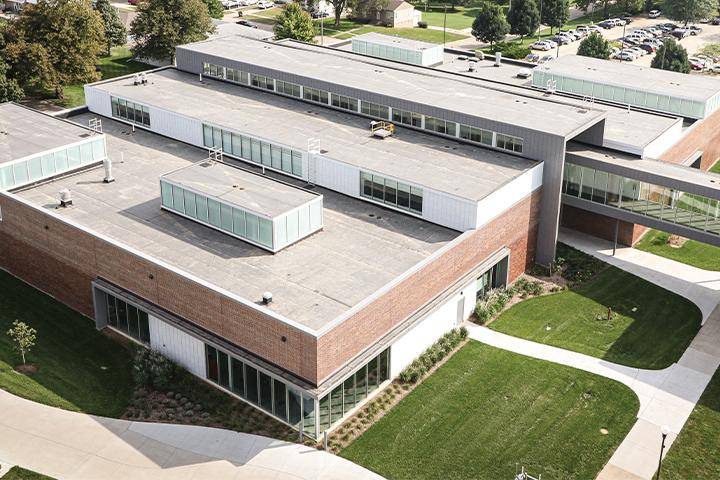
Center for Applied Technology (CAT)
The CAT is home to the Department of Technology and Applied Science and features state-of-the-art labs and tech-savvy classrooms.

Benthack Hall
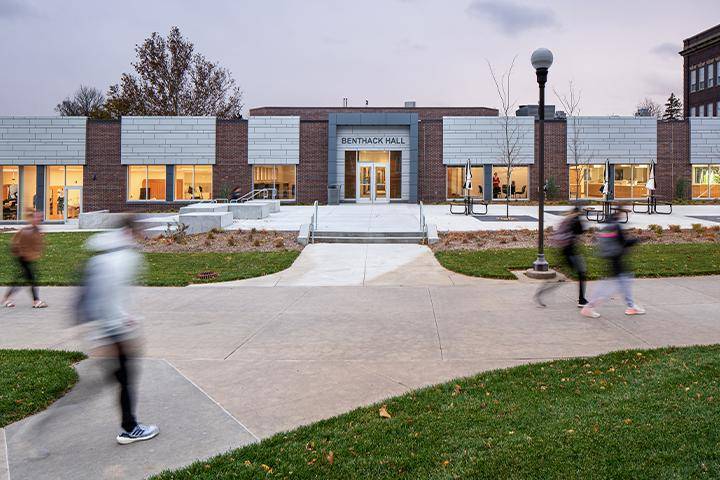
Benthack Hall is home to WSC’s programs for teacher education, family and consumer sciences, and human services and counseling programs.
Your next steps