Pre-Medical Nutrition Program

Pursue a career in dietetics with Wayne State College's Pre-Medical Nutrition program. Get the coursework and guidance you need to apply to nutrition or dietetics school.

A nutritionist consults with a client

Explore the Pre-Medical Nutrition program

Help a patient on their health journey one bite at a time. Food is a complex, personal, and cultural experience. When you pursue a degree in dietetics or medical nutrition, you take on the rewarding challenge of connecting a person’s relationship with food to their nutritional needs. Registered Dietitian Nutritionists (RDNs) are food and nutrition experts who use their knowledge of nutrition science to help improve the lives of individuals and the communities they live in. Registered dietitians assess a patient’s nutrition history, biochemical make-up, and medical tests to design personalized nutrition plans that help their clients reach their health goals. 

A graduate degree and licensure is required to become a Registered Dietitian Nutritionist. With an education grounded in biology, Wayne State College will prepare you to enter a graduate-level accredited dietetics or medical nutrition program. Courses at Wayne State are designed to fulfill prerequisites to enter UNMC’s Medical Nutrition master’s program, helping you take the next step toward a rewarding career as a dietician or nutrition specialist.

Local dietetics schools:

View program courses  Download program fact sheet (PDF)

Fast facts

Recommended major:


Delivery format: On campus (Wayne, Neb.)


School: Science, Health, and Criminal Justice


Departments: Life Sciences

Prepare for your future

Opportunities and outcomes

Rural Health Opportunities Program (RHOP)

The Pre-Medical Nutrition track within RHOP is designed for rural Nebraska students interested in returning to rural areas to practice medicine. In this program, you’ll complete your bachelor’s degree at Wayne State before entering medical school at the University of Nebraska Medical Center (UNMC) in Omaha to complete their master's program in Medical Nutrition and become a dietician. Participants in RHOP receive a full-tuition scholarship at WSC, guaranteed admission to UNMC, job shadowing and internship experiences, one-on-one advising, and early registration privileges.

Rural Health Opportunities Program

Honors Program

Honors students complete an independent research project usually spanning their junior and senior years. Your research can take you just about anywhere - in the lab or library, in the community, or in the U.S. or abroad! Honors work can also be very practical. Prospective employers and graduate admissions committees often look carefully at an undergraduate record for evidence of extra initiative and genuine intellectual strength.

Learn more about the Honors Program

Pre-Medical Nutrition internships and job shadowing

Our outstanding Career Services Office is available to help you find internships and career opportunities. Students studying biology and medical nutrition may find internships at the following locations: 

  • Nursing homes and assisted living facilities
  • Health and wellness centers
  • Grocery stores
  • CHI Good Samaritan Hospital (Kearney, Neb.)
  • Faith Regional Health Services (Norfolk, Neb.)
  • Providence Medical Center (Wayne, Neb.)

Career services and internships

Topics covered in the Pre-Medical Nutrition program

  • Principles of biology
  • Scientific writing, research, data collection, and analysis
  • Human anatomy and physiology
  • Principles of chemistry and metabolism of nutrients
  • Biochemistry of nutrition
  • Microbiology and food safety

The medical nutrition pathway prepares students to become a Registered Dietitian (RD), a credential often required for the highest-paying jobs in the field.

To become an RD, students must complete a three-step process:

  1. Complete a preparatory undergraduate course of study.
  2. Earn a master's or doctoral degree (M.S. or Ph.D.) from an approved graduate program.
  3. Pass the Registered Dietitian certification exam.

Many students have chosen to attend Wayne State and then enter UNMC’s Medical Nutrition program. Be sure to consult with your advisor to learn about the options available for you.

Most students pursing this pathway intend on applying to a graduate program (M.S. or Ph.D) to continue their education and become a registered dietician. To become a registered dietician, students must complete an undergraduate course of study that prepares them for a graduate program. Upon completion of that graduate program, students are then eligible to sit for the registered dietician exam. These steps are necessary for many of the higher paying jobs that require a person to be a registered dietician.

Note: Due to the recent addition of the Pre-Medical Nutrition program, career outcomes will be available for reporting beginning in Summer 2030 with the 2028-29 Graduate Outcomes Survey.

Career possibilities:

  • Dietician
  • Nutritionist
  • Nutritional therapist
  • Dietary clinician
Percent of WSC graduates  employed or in grad school within 6 months of graduation

job or grad school placement rate
within six months of graduation

Data based on most recent
employment outcomes survey

2025-26 Estimated Annual Cost of Attendance

$201.90

cost per credit hour

Tuition: $6,057

Fees: $2,351

Food plan: $4,830

Housing: $4,870

Total: $18,108
These figures do not include indirect cost estimates. To view a breakdown of estimated additional costs you may incur while attending WSC that are not billed to your student account, visit the Cost of Attendance page.
Cost of attendance

Least Expensive College in Nebraska

- CollegeTuitionCompare, 2025

Wayne State College is ranked the No. 1 least expensive four-year college in Nebraska and is recognized among the Top 10 most affordable colleges in the nation for out-of-state students. With the same tuition rates for in- and out-of-state students, a tuition guarantee, and generous scholarship opportunities, WSC makes earning a degree both accessible and affordable. In fact, the average remaining annual cost of attendance for 2024–25 is just $2,268 for undergraduate students after financial aid and scholarships.

Pre-Medical Nutrition program of study

The Life Sciences / Biomedical Science degree program is the recommended major for the Pre-Medical Nutrition program (required major for RHOP). Students must complete the life sciences core courses, biology concentration courses, and the biology or health science track courses. A total of 120 credit hours are needed to graduate from WSC. Additional majors or minors can be added to help meet graduation requirements.

Additional electives may be recommended for this program, such as FCS 319 Advanced Human Nutrition (required for admission to UNMC's Medical Nutriton program).

Note: Biomedical Science students must complete MAT 180 Applied Probability and Statistics for the General Studies CAT 3 requirement. FCS 207 Nutrition should be taken for the CAT 9 requirement.
 

12-13

Life sciences
core
credits

+
40-47

Biomedical science
concentration
credits

=
52-60

Total
program
credits

Life sciences core courses (12-13 credit hours)

  • Credits: 4

    Description: The first course for Biology majors. A grade of C- or better in this course is a prerequisite for all biology courses in the biology concentration. A study of the microscope, basic cell structure and function, DNA replication, mitosis, meiosis, genetics, evolution, population biology, and diversity. 3 hours lecture, 3 hours lab. Class fee of $30 required.

    Prerequisite: One year of high school biology or BIO 102 Biology for General Studies

    Note: This course is required for admission to UNMC's Medical Nutrition program.

  • Credits: 4

    Description: Emphasis on nomenclature, atomic structure, bonding, gaseous and liquid states, equilibrium, and stoichiometry. 3 hours of lecture and 3 hours of laboratory. Class fee of $20 required.

    Prerequisite: High school chemistry or CHE 102 Chemistry for General Studies

    Note: This course is required for admission to UNMC's Medical Nutrition program.

  • Choose one of the following:

    • PHY 201 General Physics I (3 credits) – An algebra-based general physics course intended primarily for health professions, life science and education students. Topics include vectors, kinematics and dynamics, equilibrium, rotational motion, energy, momentum, oscillations, fluids, and thermodynamics. Prerequisite: 2 years of algebra.
    • PHY301 University Physics I (4 credits)– A calculus- based general physics course intended primarily for scientists, pre-engineers, computer and math majors and advanced health professional students. Topics include vectors, kinematics and dynamics, equilibrium, rotational motion, energy, momentum, oscillations, fluids, and thermodynamics. Prerequisite: High school physics and MAT 140 Calculus I or equivalent calculus class.

    Plus:

    PHY 321 Physics Laboratory I (1 credit) – Concurrent enrollment in PHY 201/301 recommended but not required. This laboratory is a required course for both PHY 201 General Physics I and PHY 301 University Physics I. Experiments, appropriate to the level of lecture, include topics in mechanics, momentum, work and energy, and fluids. 3 hours lab. Physics lab fee of $20 required.

Biomedical science concentration courses (40-47 credits)

  • Credits: 4

    Description: A study of the mechanisms of inheritance, the molecular basis of gene action and the use of molecular techniques and molecular technology in biomedical, agricultural, and industrial research. The lab component of this course focuses on hands-on use of molecular equipment and technologies used in graduate and industrial molecular-based research. 3 hours lecture, 3 hours lab. Class fee of $30 required.

    Prerequisite: C- or better in BIO 110 Biology Concepts, CHE 106 General Chemistry I

  • Credits: 3

    Description: The study of the history of evolutionary thought. The course will explore the evidence for evolution by examining the fossil record, comparative anatomy/physiology, and model field studies. Students will learn the model systems demonstrating the mechanisms that drive evolution: mutation, selection, genetic drift, gene flow, and inbreeding. Students are required to conduct research projects requiring quantitative analysis of evolutionary and ecological data. Evolution is a unifying theme in biology which integrates knowledge from all biological disciplines. 3 hours lecture-lab combined.

    Prerequisite: C- or better in BIO 110 Biology Concepts, BIO 200 Zoology, BIO 210 Experimental Plant Science, and BIO 320 Molecular Genetics

  • Credits: 4

    Description: A continuation of CHE 106 with emphasis on kinetics, redox reactions, molecular geometry, hydrolysis, electrochemistry, and solubility products. Qualitative analysis included. 3 hours of lecture and 3 hours of laboratory. Class fee of $20 required.

    Prerequisite: C- or better in CHE 106 or by consent of instructor

    Note: This course is required for admission to UNMC's Medical Nutrition program.

  • Select two of the following:

    • BIO 336 Cancer Biology (3 credit hours) – This course will provide an overview of the biology and pathology of cancer. Lecture and discussion will include the various molecular and genetic changes that occur when a cell transforms from a normal to a malignant cancer cell. Changes in cancer prevalence over time, as well as current prevention measures, diagnostics, and treatments, will also be discussed. Prerequisite: C- or better in BIO 110 Biology Concepts; BIO 320 Molecular Genetics recommended.
    • BIO 385 Microbiology (4 credit hours) – Topics of study detail the structure and physiology of microorganisms including mechanisms of pathogenesis. Beneficial aspects of microorganisms are also discussed with regard to both the human body and the environment. Lab techniques include microbial identification, enumeration procedures and student designed research. 3 hours lecture, 3 hours lab. Class fee of $30 required. Prerequisites: C- or better in BIO 110 Biology Concepts and CHE 106 General Chemistry I. Note: This course is required for admission to UNMC's Medical Nutrition program.
    • BIO 430 Parasitology (3 credit hours) – Study of animal parasites and the effects they have on their hosts. Studies in this course center on parasites of humans, other vertebrates, and invertebrates. Taxonomy, morphology, development, physiology, identification, epidemiology, and pathogenesis are emphasized. An understanding of human anatomy and histology would be beneficial to students taking this course. Parasitology is highly recommended for students interested in health-related, biomedical, and biological careers. 3 hours lecture and lab combined. Class fee of $30 required. Prerequisite: BIO 110 Biology Concepts.
    • BIO 486 Immunology (3 credit hours) – The topics for this course will include the biological, physical and chemical properties of antigens and antibodies, host-antigen interaction, humoral and cellular response mechanisms, serologic reactions, mechanisms of antibody formation, hypersensitivity and the role of the immune response in cancer and organ transplants. 3 hours lecture and lab combined. Prerequisite: C- or better in BIO 110 Biology Concepts; BIO 320 Molecular Genetics recommended.
  • Select two of the following:

    • BIO 330 Histology (3 credit hours) – Study of the structure and function of cells and tissues of the human organism. Light microscopy and digital histology slides of human and other vertebrate organs and tissues will be studied. Tissue morphology and histo-pathology will be discussed along with relevant clinical considerations. An understanding of human anatomy would be beneficial to students taking this course. Histology is highly recommended for students interested in health-related, biomedical, and biological careers. 3 hours lecture and lab combined. Class fee of $30 required. Prerequisite: BIO 110 Biology Concepts.
    • BIO 340 Human Physiology (4 credit hours) – A study of the fundamental physiological processes of the human body. Functions of the 11 organ systems will be studied. 3 hours lecture, 3 hours lab. Class fee of $30 required. Prerequisites: BIO 220 Human Anatomy, CHE 106 General Chemistry I, and C- or better in BIO 110 Biology Concepts. Note: This course is required for admission to UNMC's Medical Nutrition program.
    • BIO 409 Comparative Embryology and Anatomy (4 credit hours) – A comparative study of vertebrate embryonic development and anatomy with emphasis on morphogenesis, function, and evolution of organ systems. 3 hours lecture, 3 hours lab. Prerequisites: BIO 110 Biology Concepts and CHE 107 General Chemistry II.
    • BIO 434 Advanced Cellular Biology (3 credit hours) – An advanced study of the structure and function of the eukaryotic cell. Topics will include the basics of modern cell biology including signal transduction, cell cycle regulation, and gene expression. 4 hours lecture and lab combined. Class fee of $30 required. Prerequisites: BIO 320 Molecular Genetics and CHE 107 General Chemistry II.
    • BIO 443 Advanced Human Anatomy (3 credit hours) – Under close supervision, students will dissect a human cadaver and prepare anatomical specimens. Students will learn proper dissection techniques and expand on their basic knowledge of human anatomy using a team-based approach. 3 hours lecture and lab combined. Class fee of $30 required. Prerequisite: Instructor approval.
    • BIO 301 Biology Seminar (1 credit hour) – Lecture and discussion of topics relevant to the science and practice of biology. Topics vary based on the faculty member leading the course. This course may be repeated up to a total of 4 hours, by advisement, when no duplication of topic exists, but a maximum of only 2 credit hours can count towards any Life Sciences major. Prerequisite: C- or better in BIO 110 Biology Concepts.
    • BIO 370 Introduction to Research (2 credits hours) – This course is designed for biology majors as an introduction to scientific writing, library research, data collection, and data analysis. The student will be expected to use the skills learned in this course to establish a proposal for a research project for BIO 465 and 470. Prerequisite: C- or better in BIO 110 Biology Concepts, 8 hours of biology.
    • BIO 200 Zoology (4 credit hours) – A study of the principles of biology as they apply to the uniformity, diversity, and organization of the animal kingdom. 3 hours lecture, 3 hours lab. Class fee of $30 required. Prerequisite: C- or better in BIO 110 Biology Concepts.
    • BIO 210 Experimental Plant Science (4 credit hours) – A study of the principle of biology through an investigation into the molecular, anatomical, and morphological diversity of the non-animal Eukarya. Students will use laboratory methodology and scientific inquiry to understand plant structure, function, and evolution. Topics related to the human use of plants including phytopharmacology, ethnobotany, and plant biotechnology will also be examined. 3 hours lecture, 3 hours lab. Class fee of $30 required. Prerequisite: C- or better in BIO 110 Biology Concepts.
  • Select one of the following:

    • BIO 397 Biology Internship (1 credit hour) – The internship program is a credit-bearing program providing undergraduate students with the opportunity to integrate career-related work experience with classroom learning. Work experiences occur in positions relevant to a student’s major. Internships require a minimum of 45-50 work hours for each 1 hour of credit. Contact the Career Services Office, your academic advisor, or department chair for specific details. Graded S/NC. Prerequisite: BIO 370 Introduction to Research, approval of the academic advisor and/or department chair, and a minimum 2.0 GPA requirement and/or the eligibility requirements per the department.
    • BIO 465 Continuing Research (1 credit) – This course is a continuation of BIO 370. Students taking this course will be actively involved in research under their chosen advisor. This course is to be taken after BIO 370 but prior to BIO 470 Research Project. Prerequisite: C- or better in BIO 110 Biology Concepts, BIO 370 Introduction to Research.

    Plus select one of the following:

    • BIO 469 Senior Seminar in Biology (1 credit) – Students will develop an oral and written presentation of their biology internship experience. Students will incorporate current research literature into their presentations. Prerequisite: C- or better in BIO 110 Biology Concepts, BIO 370 Introduction to Research, and BIO 397 Internship.
    • BIO 470 Research Project (1 credit) – This course is a continuation of BIO 370 and BIO 465. Students will take this course as a means of completing their individual research project under the direction of a chosen instructor. A presentation of this research in both oral and written form is required at the conclusion of the course. Prerequisite: C- or better in BIO 110 Biology Concepts, BIIO 370 Introduction to Research, and BIO 465 Continuing Research.
  • Credits: 4-7

    Choose any upper-level BIO electives or CHE 326 Biochemistry I that are not repeat courses, excluding BIO 399 International Study. BIO 301 may be taken up to two times for a maximum of 2 credit hours with no topic repeat. View the course catalog for full list of courses and descriptions.

    Note: This is required for admission to UNMC's Medical Nutrition program, specifically CHE 326 Biochemistry I.

Popular pairings

Many students at Wayne State will add a second major or a minor to complement their program of study or to focus their studies on a specific topic. Recommended pairings for Pre-Medical Nutrition include:  

View all majors and minors

Related programs

Students interested in the Pre-Medical Nutrition program may also be interested in:

Biology (B.A. or B.S.)
Chemistry / Health Sciences (B.A. or B.S.)

Students in the WSC Student Center

Transfer to Wayne State

Our generous transfer credit policy will allow you to get credit for what you've already earned.

Transferring to Wayne State

Get in touch

Department of Life Sciences
Carhart Science Building, Room 106
Phone: 402-375-7329

Visit the Department

Clubs for students in the Pre-Medical Nutrition program

Students gather at a table outside the library

Rankings and accolades

Recognized for excellence

Nebraska’s Most Affordable Health Care Degree Programs

Wayne State College ranks No. 1 in Nebraska for affordable health care degree programs, highlighting strong preparation for careers in medicine and allied health.

Learn more

Most Affordable Healthcare Degree award badge

A Best College of Distinction

Wayne State was recognized as a College of Distinction for our commitment to affordability, accessibility, and strong student outcomes that deliver a proven return on investment.

Learn more

Best Colleges of Distinction 2025-26 award badge

A Top Public College in the Midwest

Wayne State College is ranked among the top public colleges in the Midwest for 2026 by U.S. News & World Report, reflecting strong academics and student outcomes.

Learn more

top public colleges in u.s. award badge

Where you'll learnDepartment facilities

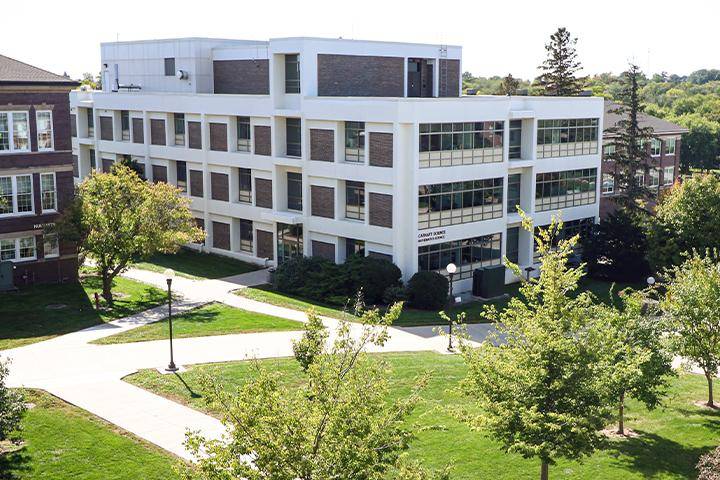
Carhart Science Building at WSC

Carhart Science Building

The Carhart Science building holds several state-of-the-art classrooms and labs for students in math, science, and pre-professional health programs.

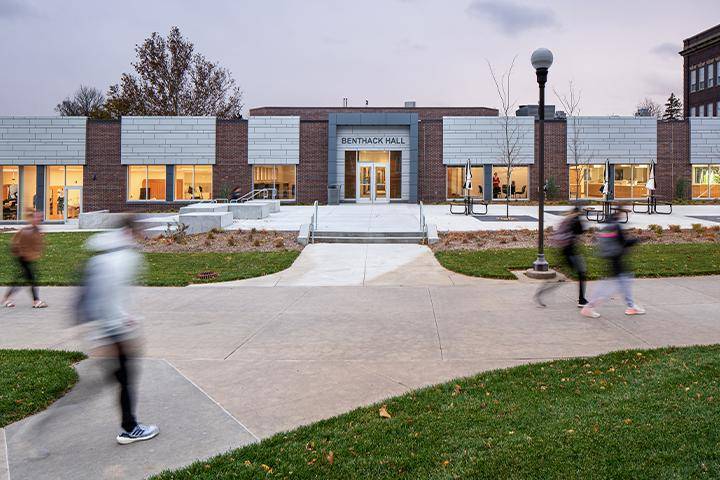
Benthack Hall at Wayne State College

Benthack Hall

Benthack Hall is home to WSC’s programs for teacher education, family and consumer sciences, and human services and counseling programs.