
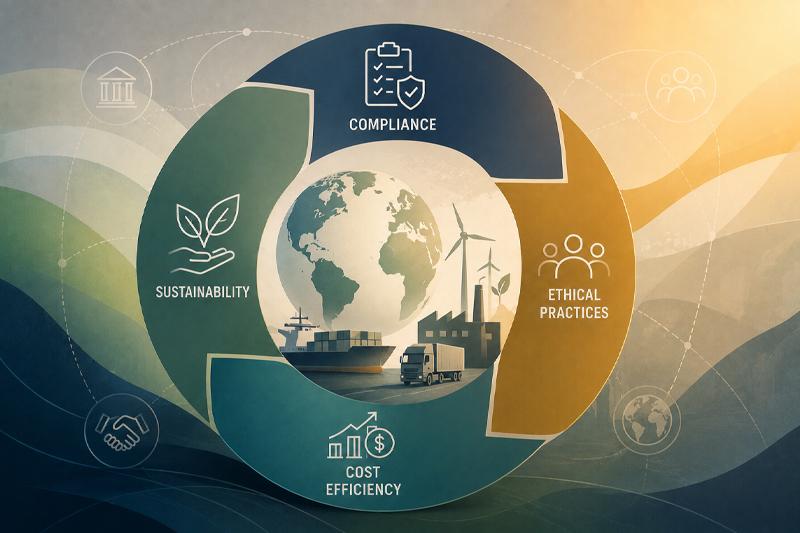
Explore how organizations balance sustainability, ethics, cost, and compliance to build resilient, transparent, and responsible supply chains.
The core function of the supply chain is to get products to the right people at the right time. However, it’s also important to consider how those products get delivered and whether core supply chain strategies might harm the very communities they're intended to support.
This is where ethics and sustainability enter the conversation. Once an afterthought, ethics now guide strategic decision-making and shape workflows. Today, supply chain leaders have the unique opportunity to incorporate their values into their everyday work while still strengthening financial performance. From ethical sourcing to responsible labor practices, supply chain visionaries uncover exciting new opportunities to make a positive difference within organizations and communities — and on a global scale.
Why Sustainability Is Reshaping Supply Chain Strategy
Sustainability holds intrinsic value and drives economic results: it limits costly resource consumption while improving consumer engagement and satisfaction. With increased profits and decreased operational expenses, it's easy to see why 80% of large companies regard sustainability as a competitive advantage.
When viewed as a strategic imperative rather than a regulatory necessity, the results can be profound. Deloitte's Jiří Pavlík explains that when businesses embrace this sustainability-first mindset, they hold the "potential to move their business forward, streamline systems and processes, and kick-start innovation."
Rising Consumer and Investor Expectations
A significant share of customers now actively seek sustainable products and services. PwC's Voice of the Consumer Survey shows that consumers are willing to pay, on average, 9.7% more for sustainably produced goods.
Investors show a similar commitment. In a survey from Morgan Stanley, 92% of investors show interest in sustainable investing, with nearly two-thirds planning to increase sustainable investment allocations. Explaining their 'why' for sustainably investing, they reveal a desire to "support positive real-world outcomes alongside a market-rate financial return."
How ESG Priorities Influence Brand Reputation
Consumers and investors clearly support sustainable business practices but often struggle to discern which enterprises actually integrate sustainability into operational practices. Environmental, social, and governance (ESG) strategies provide a practical way to assess this commitment and its actual outcomes.
Strong ESG performance indicates transparency and accountability, suggesting that organizations are fully integrating sustainable practices (as opposed to exaggerating environmental practices to gain support). As businesses demonstrate measurable progress, they gain credibility that can improve public perception and strengthen customer loyalty.
What Makes a Supply Chain Sustainable and Ethical?
Ethics and sustainability are broad terms that convey a commitment to far-reaching environmental and social practices. There is no single benchmark for when a business or its supply chain truly qualifies as ethical or sustainable; it's possible for an organization to excel in one area (such as routing and transportation) and fall short elsewhere (such as in labor practices or supplier transparency).
Ideally, businesses will achieve a balance that acknowledges the full range of practices that can prompt social or environmental harm. Priorities include:
Environmental Sustainability and Resource Efficiency
Environmentally sustainable supply chains actively seek to limit resource consumption, such as fuel use, water use, and non-recyclable packaging. Energy intensity should also be considered — it takes considerable power to heat, cool, and power facilities. In this arena, businesses demonstrate sustainability by showcasing reductions in energy use per unit produced.
Ethical Labor Practices and Human Rights Considerations
Ethical organizations can prove that, across the supply chain, their workers are treated fairly and with dignity. This means documenting wages and working hours while confirming labor law compliance via third-party audits. Social accountability standards, such as the SA8000 Certification, help organizations implement ethical practices while actively demonstrating fair treatment and safe working conditions.
Transparency and Accountability Across Suppliers
Ethics and sustainability extend beyond organization-specific practices to encompass the many vendors and partners with which businesses work. Many people argue that businesses cannot be truly sustainable if they knowingly source materials from suppliers that engage in ethically or environmentally problematic practices. Transparency improves as businesses map supply chains to verify where materials originate and implement codes of conduct to encourage ethical behavior across all stages of production.
Understanding the Circular Economy in Supply Chains
The production and consumption model known as the circular economy shows how potential sources of waste can be recovered and reused. As materials are kept in circulation, the need for energy-intensive production and resource consumption is reduced, with less waste ultimately sent to landfills. This approach decreases environmental impact while improving resilience via reduced dependence on scarce natural resources.
Designing for Reuse and Repair
The circular economy does not emerge by accident. Rather, it is the culmination of an intentional effort to reuse and repair whenever possible. This must be prioritized in the early stages of product development, which can lower resource consumption by promoting modularity or easy disassembly. Standardized components and replaceable parts extend the lives of these products.
Reducing Dependence on Virgin Materials
In a truly circular economy, sourcing primarily involves recovered materials. Closed-loop systems replace newly extracted materials with recycled alternatives. Businesses can support this effort by creating material recovery systems and partnering with recyclers or other organizations that intentionally reintroduce materials into the production cycle. Over time, circular supply chain strategies can also lower material costs, reduce dependence on volatile commodity markets, and improve operational resilience by keeping valuable resources in circulation.
Sustainable Sourcing and Responsible Procurement
Sustainable sourcing allows purchasing decisions to meet high ethical expectations, with responsible procurement building these values into supplier selection. Businesses prioritize suppliers that consistently adhere to strict labor standards, especially when these suppliers demonstrate environmental stewardship.
Responsible Procurement Policies and Vendor Selection
Responsible procurement policies outline expectations for fair labor and environmentally friendly practices. Organizations bring ethical and sustainability concerns into every aspect of vendor selection, using a blend of questionnaires and audits (along with submitted performance data) to confirm full adherence.
The Role of Fair Trade Certification and Ethical Standards
Fair Trade Certified products meet strict social and environmental standards, demonstrating a commitment to safe working conditions. Certification signals a clear commitment to ethical business conduct and may even increase confidence among consumers who build social responsibility into purchasing decisions.
Supply Chain Transparency and Traceability
Supply chain transparency and traceability represent two distinct but important elements of visibility. Transparency determines how supply chain information is disclosed, while traceability emphasizes how materials or components are tracked as they move through the supply chain.
Digital Tracking and Supplier Reporting Tools
Modern tracking solutions collect data in real time and integrate information from diverse sources within centralized digital platforms. There, details from various suppliers or logistics partners can be consolidated to create a single source of truth that helps businesses verify that suppliers meet ethical and environmental standards. Advanced reporting tools, meanwhile, help disclose information so that businesses can convey critical details about labor practices or sustainability initiatives.
Identifying Risks Within Multi-Tier Supplier Networks
Multi-tier networks present unique visibility challenges. As supply chains extend further and deeper, it becomes difficult to discern who is involved in various stages of production or whether these parties satisfy ethical expectations. Risk identification improves oversight by detailing the entire supplier ecosystem and flagging areas believed to be at risk for exploitation or specific environmental concerns.
Human Rights Due Diligence and Compliance Requirements
Organizations increasingly prioritize sustainability because they see the clear impact of waste reduction on their bottom line. However, the human dimension of ethical supply chain management must also be addressed. The real people who manufacture and transport products should be treated with dignity. Due diligence frameworks guide oversight so that all workers (across the entire global supply chain) are protected.
Modern Slavery Act Compliance and Supplier Audits
The UK's Modern Slavery Act combats exploitation by requiring certain businesses to conduct risk assessments to reveal areas in which human trafficking is most likely. Businesses must also maintain corrective action systems and identify supplier noncompliance via audits.
Under this act, supplier codes of conduct detail what ethical behavior looks like, setting expectations for safe working conditions while detailing prohibited practices. This influences many U.S. businesses that function as suppliers for UK-based brands.
Addressing Forced Labor and Unsafe Working Conditions
Forced labor represents a significant risk in modern supply chains, often emerging in subcontracted facilities or settings in which oversight is limited. Even when labor is not forced, many workers suffer unsafe conditions. For example, they may be exposed to hazardous materials or asked to work in poorly ventilated spaces.
Audits are critical for identifying these problems but must be followed by plans that promote corrective action, such as upgraded safety equipment or changes to production equipment.
Measuring Environmental Impact Across the Supply Chain
Today's sustainable strategies prioritize monitoring and measurement so enterprises can clarify where their environmental impact is most significant and whether carefully designed interventions actually deliver on their promises. This quantified approach is also crucial from a compliance perspective.
Understanding Scope 1, 2, and 3 Emissions
The Greenhouse Gas Protocol uses classifications known as scope 1, 2, and 3 emissions to shed light on how emissions are put into the atmosphere and how they contribute to greenhouse gas emissions. Scope 1 emissions are directly generated as organizations perform business activities. Scope 2 shifts the focus to indirect emissions from energy that is purchased, while scope 3 details indirect emissions within the broader value chain.
By examining these classifications, businesses can better understand where or how their respective emissions emerge and what it takes to reduce them. Identifying these emissions also helps organizations prioritize carbon footprint reduction strategies, from improving energy efficiency and transportation to working with suppliers to reduce emissions throughout their supply network.
Using Life Cycle Assessment (LCA) to Evaluate Products and Processes
Detailing the impact of products or services from cradle to grave, life cycle assessments promote responsible design. Each assessment begins with scope definition and goal-setting, then proceeds with a comprehensive inventory that details energy and material inputs alongside environmental releases. Impact assessments then leverage this data to indicate how inputs and outputs affect broader environmental concerns such as water scarcity or climate change.
Green Logistics and Transportation Efficiency
Transportation is a huge source of waste throughout the supply chain, but it’s also one of the best opportunities for driving quantifiable improvements. Green logistics creates networks that move goods efficiently while limiting both fuel consumption and emissions.
Route Optimization and Fuel Efficiency
Poorly planned routes quickly increase fuel consumption and carbon emissions, with each unnecessary mile adding to an organization's environmental footprint. That said, traditional static planning often falls short because it fails to account for in-the-moment challenges that increase fuel consumption. AI-powered dynamic routing recalculates routes based on changing conditions, with fewer detours and limited idle time resulting in significant carbon footprint reduction.
Packaging Reduction and Sustainable Distribution Practices
Product packaging serves many critical functions, distinguishing brands and protecting products while alerting consumers to critical information (such as nutrition details for food or age recommendations on toys). Unfortunately, packaging also increases waste and emissions.
Efforts to limit packaging or use renewable materials can reduce material costs and freight expenses. Right-sizing strategies limit unused space within cartons, packing more units into each shipment. Cube utilization strategies also maximize available space by strategically addressing how items are stacked and arranged.
Extended Producer Responsibility (EPR) and Product Stewardship
Environmental policies known as extended producer responsibility seek to hold manufacturers accountable for waste produced throughout the entire product lifecycle. This places the burden of waste management on producers rather than taxpayers and their municipalities.
From the manufacturer's perspective, this means actively managing products beyond the point of sale — considering how they will be used over time and how they will eventually be disposed of, or, ideally, reused.
The Business Case for Sustainable Supply Chains
Sustainable supply chains may be ethically preferable, but they also drive documented economic advantages. These long-term financial benefits can overcome initial resistance or a general preference for the status quo, given that the failure to adopt sustainable practices could prove a real liability. Business arguments often center on these key priorities:
Reducing Waste and Operational Costs
Sustainability's most recognizable and quantifiable economic benefits often come down to waste reduction. Excess water and fuel are both environmentally damaging and costly. Businesses that optimize routes and consolidate loads dramatically reduce fuel costs, while reductions in water use lead to lower utility bills and wastewater expenses.
Strengthening Brand Equity and Customer Trust
Research shows a growing connection between sustainable practices and brand equity, or the commercial value of customer awareness and trust. Simply put, consumers connect more authentically with brands that share their core values and are more likely to continue supporting those brands in the long run. This can lead to increased profits as consumers make more frequent purchases, as well as increased marketing ROI by limiting the need to build trust from scratch.
Managing Regulatory and Reputational Risk
With regulatory expectations increasing, businesses now face significant penalties when they fail to meet strict environmental or labor standards. Noncompliance prompts fines and corrective actions, but the ensuing reputational damage can be just as harmful; brands risk losing critical partners or investors, while consumer spending decreases in response to negative publicity and lost trust.
Challenges Organizations Face When Implementing Sustainable Supply Chains
The shift toward sustainable supply chains may be ethically and economically worthwhile, but hiccups can be expected along the way. Successful implementation calls for structural and even cultural shifts that span the entire supply chain. Businesses must commit to upgrading equipment and implementing traceability solutions but may lack the upfront capital needed to deploy these systems at scale.
Amid such significant transitions, businesses can also experience costly disruptions, whether that’s temporary slowdowns in production or quality control challenges as new workflows stabilize.
Even when capital is available and disruptions are avoided, businesses can struggle to achieve lasting change when employee buy-in is lacking. Without cultural readiness, ambitious sustainability efforts are unlikely to truly stick. Reluctant teams may revert to familiar practices if they aren't deeply invested in the values driving these changes in the first place.
The Future of Sustainable Supply Chain Management
The biggest shift in sustainable supply chain management involves a simple change in intention. Today's leaders are more committed to improving sustainability and more inclined to believe that sustainable systems will drive positive economic outcomes.
Increasingly, enterprises are moving beyond traditional notions of sustainability to emphasize regeneration: not just reducing harm but actively seeking restoration, with the recognition that supply chain resilience is closely linked to overall ecosystem health. Issues such as water scarcity and soil quality can increase global supply chain volatility while driving up operational expenses.
These intensifying pressures have prompted organizations to explore innovative solutions that add a predictive element to planning and decision-making. Data-driven solutions promise increased visibility and efficiency via automation. Unfortunately, AI advancements introduce their own ethical and environmental challenges, such as data centers that consume significant resources and algorithms that perpetuate biases. These problems must be carefully examined alongside the potential positive outcomes.
Moving forward, businesses can also expect increased regulatory pressure. For example, the European Union's Corporate Sustainability Due Diligence Directive (CSDDD) encourages businesses to "identify and address adverse human rights and environmental impacts of their actions." Such requirements hold direct implications for businesses operating within today's increasingly global supply chains.
Sustainable Supply Chains Require Long-Term Thinking
Embrace a sustainable future and explore opportunities for reducing waste throughout the supply chain. Analytical skills and strategic planning grow more essential as organizations shift toward proactive or regenerative solutions. These competencies can be strengthened through targeted, graduate-level coursework.
At Wayne State College, we advocate for an ethical approach to operational decision-making and empower you to act according to your deeply held values. Our online MBA in Supply Chain Management allows you to build the strategic insight and technical expertise needed to shape tomorrow's efficient and resilient supply chains. Learn more about our curriculum or apply today.
FAQs
What is the difference between a sustainable supply chain and an ethical supply chain?
While the terms are closely related, a sustainable supply chain typically focuses more on environmental impact and long-term resource management, whereas an ethical supply chain emphasizes labor practices, worker safety, human rights, and responsible sourcing. Many organizations combine both approaches as part of broader ESG initiatives.
What is a circular economy in supply chain management?
The circular economy is a model designed to reduce waste by keeping materials and products in use for as long as possible. In supply chains, this can include recycling, refurbishment, remanufacturing, reusable packaging, and designing products for longer lifecycles rather than disposal after a single use.
What are Scope 1, 2, and 3 emissions?
Scope 1, 2, and 3 emissions are categories used to measure greenhouse gas emissions. Scope 1 covers direct emissions from company operations, Scope 2 includes indirect emissions from purchased energy, and Scope 3 involves emissions across the broader value chain, including suppliers, transportation, and product use.
What is Extended Producer Responsibility (EPR)?
Extended Producer Responsibility (EPR) is a policy approach that makes manufacturers responsible for the environmental impact of products throughout their lifecycle, including disposal or recycling. EPR programs are often used to encourage better product design, waste reduction, and recycling infrastructure.
Why is supply chain transparency important?
Supply chain transparency helps organizations identify environmental, labor, and compliance risks across suppliers and operations. It also helps build trust with consumers, investors, regulators, and business partners by demonstrating accountability and ethical sourcing practices.
Sources
- https://www.wsc.edu/supply-chain-management-mba-online
- https://www.pwc.com/gx/en/news-room/press-releases/2024/pwc-2024-voice-of-consumer-survey.html
- www.deloitte.com/cz-sk/en/services/consulting/research/sustainable-supply-chain-survey.html
- https://sa-intl.org/programs/sa8000/
- https://www.epa.gov/circulareconomy/what-circular-economy
- https://hrmars.com/papers_submitted/25417/from-esg-to-brand-equity-the-mediating-role-of-brand-reputation-and-brand-attachment.pdf
- https://www.legislation.gov.uk/ukpga/2015/30/contents
- https://unece.org/trade/value-chain-traceability-and-transparency
- www.sciencedirect.com/science/article/abs/pii/S2214212625002066
- https://www.sap.com/resources/supply-chain-network
- https://commission.europa.eu/topics/business-and-industry/doing-business-eu/sustainability-due-diligence-responsible-business/corporate-sustainability-due-diligence_en
- https://procurementmag.com/news/fair-trade-usa-ensuring-ethical-supply-chains
- https://archive.epa.gov/epa/saferchoice/design-environment-life-cycle-assessments.html
- https://www.mckinsey.com/featured-insights/mckinsey-explainers/what-are-scope-1-2-and-3-emissions
- https://ghgprotocol.org/sites/default/files/standards/ghg-protocol-revised.pdf
- https://www.sdcexec.com/sustainability/carbon-footprint/article/22944187/dispatch-science-how-fleet-optimization-drives-sustainable-supply-chains
- https://www.scmr.com/paper/the-environmental-impact-of-right-sizing-packaging
- https://www.deloitte.com/global/en/services/consulting-risk/blogs/to-be-sustainable-or-resilient-or-both.html
- https://www.frontiersin.org/journals/sustainability/articles/10.3389/frsus.2025.1698178/full
- https://www.scmr.com/article/why-do-supply-chains-need-to-think-beyond-sustainability