
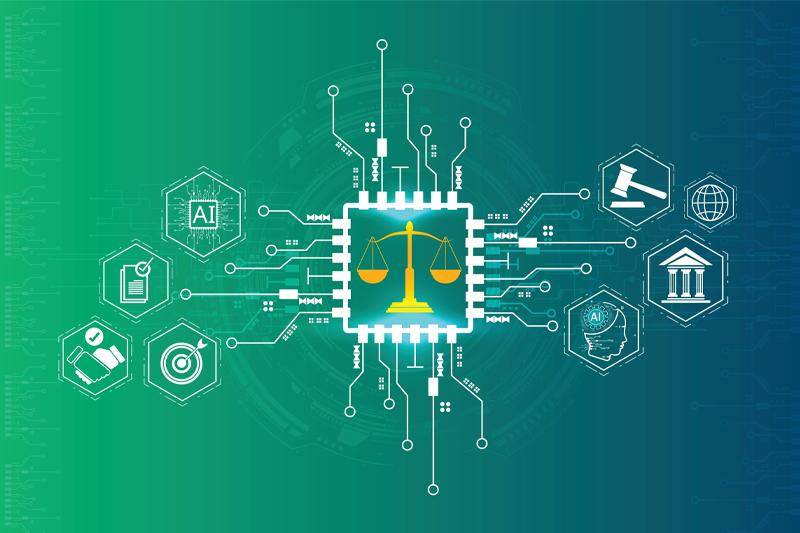
Explore how data, technology, and ethics are transforming criminal justice, from AI and analytics to digital evidence and leadership in modern justice systems.
Advancements in data analytics and technology continue to change the field of criminal justice. From body-worn cameras to real-time intelligence sharing, agencies are leveraging innovations to enhance efficiency, accuracy, and accountability. At the same time, ethical frameworks are becoming increasingly central to guiding decisions that balance public safety with individual rights. The convergence of criminal justice technology and ethics promises a transformative era in justice administration.
Why the future of justice will be data- and tech-enabled
Traditionally, the justice system struggled to minimize bias with respect to the justice gap in underserved populations. As a result, criminal justice systems increasingly rely on data-driven insights to inform strategies, allocate resources, and predict outcomes.
When applied strategically, advanced analytics and artificial intelligence (AI) in criminal justice can identify patterns in crime, optimize patrol routes, and enhance case management. Meanwhile, devices like body-worn cameras provide real-time evidence and transparency. Supported by fusion centers, intelligence sharing across agencies accelerates decision-making and strengthens collaboration to break down traditional data silos. Ultimately, pairing technology with ethical frameworks can improve efficiency alongside transparency and accountability, helping promote criminal justice reform.
As agencies adopt these tools, the future of justice becomes one where informed, evidence-based approaches complement human judgment. A data- and tech-enabled justice system, increasingly driven by artificial intelligence, cloud computing, and digital automation, can help mitigate traditional challenges with efficiency (supported by data) and judgment (supported by humans).
Analytics in criminal justice: from reports to decision support
Analytics in criminal justice has evolved from retrospective reporting to a proactive tool for guiding decisions. Modern systems integrate data from multiple sources, enabling agencies to anticipate challenges, optimize resource allocation, and support frontline personnel with timely, actionable insights.
Operational and case analytics that improve outcomes
Operational and case-level analytics help agencies move away from reactive responses by supporting proactive strategies instead. Analyzing crime patterns, case timelines, and resource deployment allows departments to optimize patrol coverage, reduce case backlogs, and improve clearance rates. Prosecutors and investigators benefit from data that highlights connections, risks, and priorities. These capabilities support faster, more informed decisions that improve public safety and system efficiency.
Guardrails for analytics (bias, privacy, and transparency)
As AI and analytics become more influential, strong safeguards are essential to maintaining fairness and public trust.
Addressing bias in data and algorithms requires continuous auditing and diverse oversight. Additionally, privacy protections must govern how sensitive information is collected, stored, and shared. Prioritizing transparency through open data portals, logical analytical methods, and clear decision processes also helps maintain accountability, ensuring that technology supports justice without undermining civil liberties or community confidence.
Body-worn video and digital evidence: policy, chain of custody, and quality
Body-worn camera policy and digital evidence management systems have become central to modern justice operations, requiring clear policies and consistent standards for digital forensics records. Agencies must ensure integrity, accessibility, and responsible use while balancing transparency, privacy, and evidentiary reliability across the justice process.
Evidence management and retention standards
Effective evidence management begins with the secure capture, storage, and indexing of digital files. Clear retention policies define how long footage is preserved based on case type, legal requirements, and evidentiary value. Automated workflows can help maintain the chain of custody, documenting every access or transfer. Finally, standardization across agencies reduces risk, ensures compliance, and supports admissibility in court proceedings.
Using video for training and performance improvement
In addition to evidentiary use, body-worn video can provide valuable opportunities for training and professional development. Agencies can analyze real-world interactions to identify best practices, reinforce de-escalation techniques, and improve officer decision-making. Structured review processes, paired with data governance and privacy safeguards, enable supervisors to deliver constructive feedback while fostering accountability, consistency, and continuous improvement.
Intelligence sharing and information systems
Effective justice administration depends on timely, accurate information that flows easily across agencies and jurisdictions. Modern information systems enable coordinated responses. They also require strong governance, technical standards, and safeguards to ensure data is shared responsibly, compliantly, and securely.
Interagency sharing (benefits, risks, and governance)
Interagency information sharing enhances situational awareness, reduces duplication, and supports coordinated investigations. However, it also introduces risks related to data misuse, inconsistent standards, and mission creep.
Clear governance structures, memoranda of understanding, and defined data ownership help ensure accountability. Establishing oversight mechanisms and audit trails strengthens trust while enabling agencies to collaborate effectively without compromising legal or ethical obligations.
Interoperability and secure exchange (RMS/CAD and access controls)
Interoperability between records management systems (RMS) and computer-aided dispatch (CAD) platforms facilitates seamless data exchange across jurisdictions while supporting real-time crime centers. Standardized formats and APIs allow systems to communicate efficiently, and robust access controls ensure only authorized personnel can view or modify sensitive information.
Additionally, encryption, authentication protocols, and role-based permissions are critical to protecting data integrity and maintaining security in complex, interconnected justice environments.
AI and automation in justice: practical use cases and real risks
Artificial intelligence, automation, and public safety technology have rapidly entered justice workflows, enhancing operations, augmenting human decision-making, and streamlining routine tasks. While these tools offer measurable gains in speed and consistency, they also raise concerns that require careful oversight, validation, and policy alignment.
Where AI helps today
AI is already supporting tasks, such as:
- Document review
- Law enforcement data collection and reporting
- Use of force reporting
- Evidence classification
- Transcription
- Crime analysis
- Predictive analysis (such as predictive policing and risk terrain modeling)
Powered by AI, automated tools can flag relevant case materials, identify patterns across large datasets, and assist with risk assessments. These capabilities reduce administrative burden and allow personnel to focus on higher-value work. This improves timeliness and consistency across public safety responses, investigations, court processes, and corrections operations.
Responsible AI controls and human-in-the-loop review
Despite its many benefits and uses, AI in law enforcement is not foolproof. To ensure responsible use, agencies must implement controls that address bias, accuracy, and accountability. Regular testing and validation help confirm system reliability, while clear documentation explains how models function and make decisions or recommendations.
Additionally, human-in-the-loop review remains essential, as it ensures that critical decisions are not fully automated and that professional judgment, legal standards, and ethical considerations guide final outcomes.
Cybersecurity and data governance as justice essentials
As justice systems become increasingly digital, cybersecurity and strong data governance are foundational to maintaining integrity and public trust. This is true for local courts, law enforcement agencies, law firms, and even the federal judiciary system, all of which are potential targets for cyberattacks.
Agencies must protect sensitive information from breaches, unauthorized access, and tampering through layered security measures, encryption, and continuous monitoring. Clear governance policies define data ownership, access, and lifecycle management to ensure consistency and compliance. Together, these practices safeguard operations, preserve evidentiary value, and reinforce confidence in modern justice systems.
Ethical decision-making for modern justice leaders
With technology and data impacting justice systems, leadership decisions carry greater complexity and consequence. Ethical frameworks provide essential guidance to help leaders navigate competing priorities and uphold legitimacy. Sound frameworks also ensure that innovation aligns with fundamental principles of fairness, accountability, and public trust.
Core principles and procedural justice in practice
Ethical leadership in justice systems is grounded in honesty and a respect for rights. Procedural justice emphasizes consistency and impartiality while aiming to give individuals a voice in the process.
Leaders must strive to embed these principles into policies, daily operations, training, and change management procedures to ensure decisions are lawful and perceived as legitimate by the communities they serve.
Equity, bias mitigation, and decisions under uncertainty
Modern justice leaders must also actively address disparities and mitigate bias in both human judgment and automated systems. This includes scrutinizing data sources, monitoring outcomes, and implementing corrective measures when inequities emerge.
Decision-making often occurs under uncertainty, and this requires leaders to consider risk, evidence, and ethical factors while remaining adaptable, transparent, and accountable for their choices.
Workforce implications: the skills justice agencies need next
The evolution of justice systems has created a growing need for a workforce equipped with both technical and ethical competencies. Professionals must understand data literacy, digital evidence, and emerging technologies while maintaining strong judgment and communication skills.
Continuous training and cross-disciplinary expertise will be essential as roles adapt. A workforce that can interpret data, apply technology responsibly, and uphold the values of justice is critical for institutions and agencies to continue adopting the latest innovations into the future.
Implementation playbook: how agencies adopt technology responsibly
Adopting new technology in justice systems requires a deliberate and structured approach that balances innovation with accountability. Agencies must align tools with mission needs, manage risks, and ensure transparency to build trust, all while delivering measurable improvements in operations, performance, and outcomes.
Start with outcomes and use cases
Successful implementation begins by clearly defining desired outcomes and identifying specific use cases where technology can add value or improve workflow. Agencies should engage stakeholders across roles, departments, and agencies to understand operational challenges and priorities. Focusing on practical applications ensures investments in new technology are targeted, relevant, and capable of addressing real problems. This helps agencies avoid adopting technology for its own sake.
Pilot, measure, and scale with accountability and transparency
Piloting new solutions allows agencies to test effectiveness, identify risks, and refine processes before full deployment. Establishing clear metrics helps evaluate performance, equity, and impact. As programs scale, maintaining transparency through reporting and oversight is essential. Accountability mechanisms (such as audits and feedback loops) ensure technology use remains aligned with legal standards, ethical principles, and public expectations.
Common pitfalls and how to avoid them
Agencies can face a variety of challenges when implementing new technology and AI in criminal justice. Common pitfalls (and solutions) include:
- Adopting technology without clear goals can lead to wasted resources.
Define specific goals, outcomes, and use cases upfront. - Underestimating training needs limits effectiveness.
Invest in continuous workforce development while prioritizing training and change management. - Overlooking ethical risks can erode trust.
Embed safeguards and accountability from the start. - Poor data quality undermines insights.
Implement strong data governance practices. - Lack of interoperability creates silos.
Prioritize systems that seamlessly integrate and readily share information.
Prepare for the future of criminal justice with Wayne State College
As criminal justice evolves through data, technology, and ethical leadership, professionals must be equipped to navigate these changes. Wayne State College's online master's degree in Criminal Justice Administration and Management is designed to prepare leaders with advanced skills in analytics, digital tools, and ethical decision-making frameworks. A strong educational foundation empowers graduates to drive innovation, improve outcomes, and positively impact the future of justice with confidence and integrity.
To learn more about earning your master's in criminal justice from Wayne State College, we invite you to explore admissions, request additional information, or apply today.
FAQs: future of criminal justice — data, technology, and ethical decision-Making
1) How can agencies use analytics without increasing bias?
Start with high-quality data definitions. Then, audit for disparate impact, document methods, add human review, and communicate transparently about what analytics does and does not do.
2) What body-worn camera policies matter most?
Important policies include retention, access controls, redaction rules, supervisor review standards, and clear guidelines for release and privacy protections.
3) Is AI being used in criminal justice today?
Yes. AI is often used for supportive tasks like transcription, search, and triage. High-stakes uses require strict governance, validation, and human oversight.
4) What is the biggest risk with interagency intelligence sharing?
Mission creep and privacy violations are big risks. Strong purpose limitations, role-based access, audit trails, and oversight are essential to mitigating them.
5) How does procedural justice connect to technology?
Technology affects how people experience fairness, transparency, and accountability. Policies and training must ensure tools reinforce respectful, consistent practice.
6) What skills will justice leaders need most in the next decade?
Data literacy, tech governance, cybersecurity awareness, and the ability to lead change while maintaining ethics and public trust are key skills.
7) How should an agency start modernizing?
Choose one measurable use case (e.g., reduce evidence backlog), pilot with guardrails, train supervisors, measure outcomes, and scale iteratively.
Sources
- https://www.forbes.com/sites/deloitte/2024/10/17/technology-and-justice-systems-a-path-to-transformation/
- https://bja.ojp.gov/program/it/national-initiatives/fusion-centers
- https://blogs.worldbank.org/en/governance/five-ways-digital-technologies-are-transforming-courts-and-acces
- https://counciloncj.org/the-implications-of-ai-for-criminal-justice/
- https://www.ojp.gov/library/publications/managing-digital-evidence-body-worn-cameras-case-studies-seven-sites
- https://www.unodc.org/cld/en/education/tertiary/cybercrime/module-4/key-issues/standards-and-best-practices-for-digital-forensics.html
- https://www.ojp.gov/ncjrs/virtual-library/abstracts/police-technologies-place-based-crime-preventionintegrating-risk
- https://time.com/7306226/ai-criminal-justice-police-courts-cops/
- https://www.fedbar.org/blog/cybersecurity-challenges-for-federal-attorneys-and-judges/
- https://www.uscourts.gov/data-news/judiciary-news/2025/08/07/cybersecurity-measures-strengthened-light-attacks-judiciarys-case-management-system