
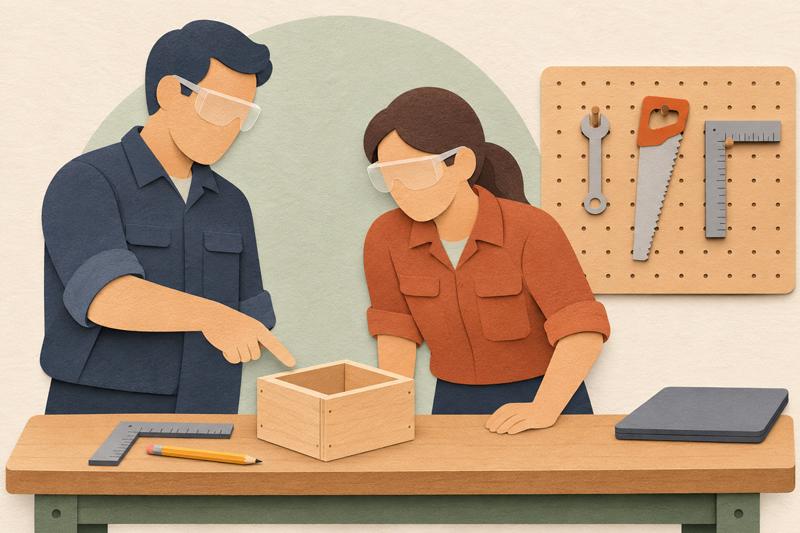
Explore skilled and technical sciences education and how WSC’s online MSE helps technical instructors strengthen teaching, curriculum design, assessment, and workforce training.
Ready to fortify your teaching career with a deeper dive into skilled and technical sciences (STS) education? A specialized master's in education could be a great way to enhance your leadership, teaching, and classroom instruction skills while exploring instructional theory and new approaches to curriculum design.
With a better understanding of what a master's in skilled and technical sciences education (MSE) from Wayne State College entails, you can determine whether this path aligns with your goals.
What Is Skilled and Technical Sciences Education?
Skilled and technical sciences education aims to blend technical expertise with practical, applied learning experiences. In a technical education degree program, students develop real-world occupational skills while learning how to solve problems, use specialized equipment, and meet professional standards in their chosen fields.
How Skilled and Technical Sciences Fits Within Career and Technical Education
Within the broader career and technical education (CTE) field, skilled and technical sciences aims to build students' practical skills and industry credentials while equipping learners with a combination of technical, academic, and professional competencies.
The Types of Trades and Technical Fields It Can Encompass
There are many industries and trades that may be covered in CTE, including (but not limited to):
- Construction
- Manufacturing
- Automotive and transportation
- Agriculture
- Industrial technology
- Information technology (IT)
Why Applied, Hands-On Learning Is Central to the Discipline
In these types of industries, technical competence is critical — yet building strong technical expertise requires a great deal of hands-on practice. CTE programs give students opportunities to operate equipment, troubleshoot real-world problems, and complete projects that help build the skills they'll use in their future work.
How Is Skilled and Technical Sciences Education Different From Traditional Academic Education?
Compared to "traditional" academic education, technical education tends to focus more on the practical applications of concepts. Rather than learning from a textbook or a classroom lecture, students in CTE programs learn through doing.
Teaching Occupational Skills Alongside Academic Concepts
Technical education doesn’t replace academic learning. Rather, occupational and technical skills are taught alongside academic concepts, helping learners better understand how different concepts apply to their chosen fields.
Using Labs, Shops, Equipment, and Real-World Projects
As part of a CTE program, students may have access to a wide range of labs, shops, simulations, equipment, and projects that allow students to practice skills in hands-on environments that resemble their future workplaces. This, in turn, may help students better prepare for the realities of their work.
Preparing Learners for Workplace Expectations
One of the most important responsibilities of a CTE teacher is to prepare learners for the professional expectations of their workplaces. This means not only teaching the technical and academic aspects of the field but also building students' communication, teamwork, safety awareness, and problem-solving skills.
What Is an MSE in Skilled and Technical Sciences Education?
Wayne State College's Master of Science in Education (MSE) in Skilled and Technical Sciences Education is a 36-credit graduate degree focused on strengthening skills needed to teach and improve modern technical education programs. In this program, students focus on essential topics such as:
- Advanced instructional methods for technical educators, including strategies for sequencing instruction, supporting learners, and creating more effective learning environments.
- Curriculum and program development, or the process of aligning curricula and programs with relevant learning objectives.
- Assessment of hands-on and performance-based learning, or determining whether learners are able to apply skills effectively and safely based on demonstrations, observations, and practical assessments.
- Research and improvement in technical education, or the ability to support continuous program improvement through research and design.
How Can an MSE Benefit Trade and Technical Instructors?
Could an MSE be right for you as an educator? Notable benefits of a graduate-level education for trade and technical instructors include:
- Turning years of occupational experience into effective instruction.
- Designing structured hands-on learning experiences that go beyond assigning a project to sharpen practical skills.
- Building safety into technical training with specialized instruction on hazard recognition, safety communication, and risk evaluation.
Why Might Community College Educators Pursue This Degree?
Community college educators may pursue an MSE in Skilled and Technical Sciences Education, and for good reason. These professionals play a critical role in technical education and workforce preparation, serving learners with diverse educational backgrounds and work experiences.
Teaching Career-Focused Postsecondary Learners
Graduate-level preparation could help existing instructors develop teaching strategies that are better suited to the unique needs of postsecondary and adult learners in technical fields.
Responding to Changing Regional Workforce Needs
As skilled and technical industries continue to evolve, the right education can prepare instructors to adapt their teaching to changing industries and labor markets.
Working With Industry Advisory Groups and Employers
Industry partnerships could help educators better identify the emerging skills and proficiencies that students entering the field will need. From there, they can explore and create opportunities for students to build valuable, relevant experience.
Supporting Adult and Nontraditional Students
Because technical programs often serve diverse populations of working adults, career changers, veterans, and other nontraditional students, the right education can prepare instructors to provide the right level of academic support.
How Does Skilled and Technical Sciences Education Apply to Workforce Training?
These same concepts can also apply to instructors who are leading workforce and professional training. Specifically, an MSE program could help these instructors when it comes to:
- Designing training around real-world job competencies.
- Evaluating employee skill development through observations and practical assessments.
- Connecting training with relevant organizational and industry standards.
What Types of Subjects Can Skilled and Technical Sciences Educators Teach?
Skilled and technical sciences educators can teach in a wide range of subjects, including:
- Construction and skilled trades
- Automotive and transportation technologies
- Manufacturing and industrial technology
- Agriculture and natural resources
- Information technology and emerging technical fields
Why Is Safety a Core Part of Technical Education?
Since students in technical fields often find themselves working with heavy machinery, vehicles, tools, and other potentially hazardous equipment, safety is an essential element of their education. According to the Association for Career & Technical Education (ACTE), "teachers who had comprehensive training were 49% less likely to have had an accident in their courses."
CTE teachers should focus on teaching safe practices before independent work is performed; preparing students to identify and address potential hazards; and updating education as equipment and safety standards change.
What Role Does Work-Based Learning Play in Technical Education?
In modern technical education, work-based learning plays a critical role in connecting "traditional" classroom instruction with authentic and hands-on professional experiences. As part of technical education, instructors may work to provide students with access to:
- Internships and cooperative education, which empower students to apply classroom knowledge in professional settings.
- Apprenticeships and employer partnerships, which combine structured instruction with supervised workplace learning.
- Industry-sponsored projects and simulations, including case studies that bring authentic workplace problems into the classroom.
As part of a technical education program, instructors aim to connect workplace performance with classroom learning in a way that prepares students for the future opportunities and challenges of their chosen fields.
How Can Technical Educators Measure Whether Their Programs Are Working?
Another important aspect of any technical educator's job is critically assessing their own programs to determine how effective they are at preparing students for their chosen field. This may include assessing the following:
- Technical skill attainment, or using practical assessments to quantify students' technical proficiency.
- Credential and program completion, or data that can show whether learners are meeting specific milestones throughout their respective programs.
- Employment and continuing education outcomes, including statistics on student employment, retention, and advancement after graduation.
- Employer and graduate feedback, which may inform future curriculum development.
How Can Applied Research Improve a CTE Program?
Through applied research, which is taught as part of the MSE curriculum at Wayne State College, instructors learn how to investigate challenges within their own programs while making evidence-based improvements. Instructors can build valuable skills in:
- Identifying problems of practice, including low completion rates and gaps between curriculum/employer expectations.
- Testing new instructional approaches, including innovative technologies and project-based learning.
- Evaluating curriculum or training changes to determine whether new approaches produce meaningful improvement.
- Using findings to guide program decisions based on labor-market outcomes.
Do You Need an Education Bachelor’s Degree to Enter the MSE?
The answer can vary from program to program. At Wayne State College, the MSE in Skilled and Technical Sciences is designed to give teachers who are already certified in their content areas an opportunity to go deeper into their specialties, with the added benefit of earning a graduate-level degree. In Nebraska, this includes having a minimum of a bachelor's degree — although that degree doesn't necessarily have to be in education. In some cases, individuals not holding teaching credentials may be considered for admission, provided that they meet all other admission criteria.
Who Should Consider an MSE in Skilled and Technical Sciences Education?
Still trying to decide whether an MSE in Skilled and Technical Sciences Education could be right for you? In general, students best suited for this program include:
- Current CTE teachers looking to deepen their instructional expertise.
- Trade and technical instructors who want to build formal skills in assessment, curriculum, and educational research.
- Community college educators who wish to tailor their teaching to career-focused learners.
- Workforce and corporate trainers looking to apply educational principles to the workplace setting.
- Industry professionals who are interested in transitioning to education.
Expanding Your Impact in Career and Technical Education
As the need for skilled trades and technical expertise continues to increase, the demand for skilled and experienced CTE instructors is also likely to rise. If you already have your teaching certification and are looking to advance your education with a graduate-level degree in Skilled and Technical Sciences Education, Wayne State's program may be right for you.
In this 36-credit program, students explore dedicated coursework in topics such as curriculum design and instruction, assessment, educational research and design, and instructional theory. With coursework offered in a convenient online format, even busy professionals can pursue their degrees at a flexible pace.
Get in touch to request more information about Wayne State College's MSE in Skilled and Technical Sciences Education today. Ready to take the next step? You can also get started with your application for admission here.
Frequently Asked Questions About Skilled and Technical Sciences Education
Is skilled and technical sciences education the same as career and technical education?
Skilled and technical sciences generally falls within the broader career and technical education landscape. CTE covers many career-oriented fields, while skilled and technical sciences often emphasize occupational areas involving substantial technical, laboratory, shop, or hands-on preparation. The exact terminology and organization of these programs can vary by state and institution.
Can someone become a CTE teacher after working in industry?
Yes, depending on the requirements of the state and educational setting. Experienced professionals may bring valuable subject-matter expertise from trades, technology, manufacturing, agriculture, or other industries. They may still need to develop instructional skills and, for some PK-12 positions, satisfy teacher certification or alternative licensure requirements.
Do community college technical instructors need a teaching degree?
Not always. Hiring requirements vary by institution and discipline, and some community colleges may place significant value on graduate education, occupational experience, or industry credentials. Even when teacher licensure is not required, an education-focused graduate degree can help instructors strengthen curriculum development, assessment, instructional methods, and student support.
How is teaching a technical skill different from performing it professionally?
A skilled professional may perform a task almost automatically after years of experience. An educator must be able to break that task into understandable steps, explain why each step matters, recognize common mistakes, assess learner performance, and adapt instruction when a student struggles.
Can an MSE help someone who trains employees rather than college or high school students?
Yes. Workforce trainers also need to identify learning objectives, design instruction, assess competency, and determine whether training produces the intended results. Graduate study in technical education may help professionals create more systematic and measurable training experiences.
Is work-based learning required in every technical education program?
No. The availability and structure of work-based learning vary by program, employer partnerships, location, and occupational field. Some programs use internships or apprenticeships, while others may incorporate job shadowing, client projects, simulations, school-based enterprises, or employer-supported assignments.
How can technical educators stay current when an industry changes quickly?
Educators may maintain connections through employer advisory committees, professional associations, industry certifications, continuing education, equipment training, workplace visits, and partnerships with local employers. These relationships can help instructors identify which technologies and skills should be incorporated into curriculum updates.
Is an MSE useful if I already have extensive teaching experience?
It can be. Experienced educators may pursue graduate study to deepen their knowledge of curriculum design, assessment, applied research, program evaluation, leadership, or workforce alignment. The value depends on the educator's goals and the specific content of the program.
Can skilled and technical sciences educators move beyond classroom teaching?
Potentially. Experience and graduate preparation may support opportunities involving CTE coordination, curriculum development, program administration, workforce partnerships, professional development, or other education leadership responsibilities. Qualifications vary by employer and position.
Sources